
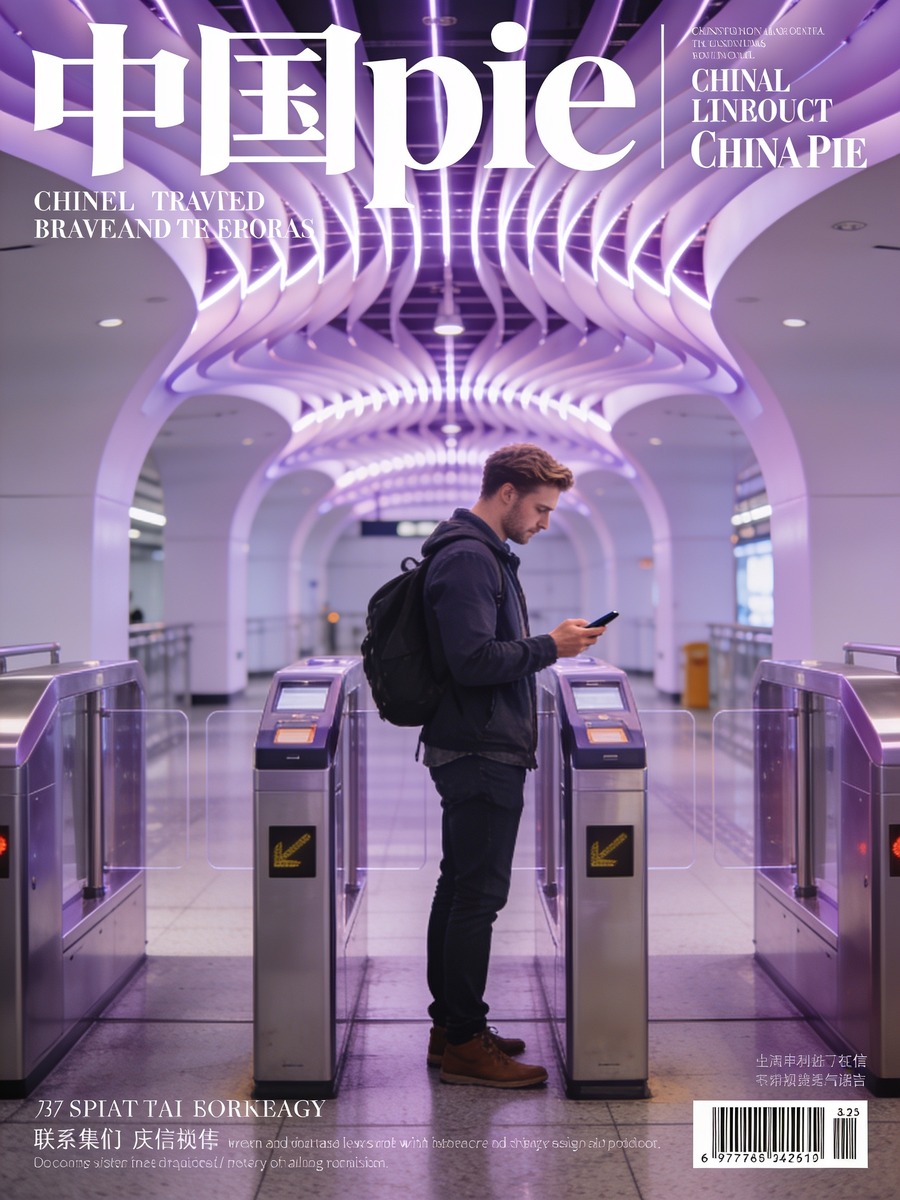
核心观点
Tap a contactless Visa, Mastercard, Amex, JCB, or UnionPay card straight on the metro gate in Beijing and Shanghai, no app or ticket needed. Every other Chinese city still requires Alipay's Transport QR code, which is a separate code from your payment QR. Card tap charges the full undiscounted fare, while the Alipay QR gives you the standard discounted rate.
正文
The Two Ways to Pay for a China Metro in 2026
For a foreigner, paying for the metro in China comes down to two realistic options right now:
- Contactless card tap: works in Beijing and Shanghai, zero setup, slightly higher fare.
- Alipay Transport QR code: works in most Chinese cities, needs a few minutes of setup, gives you the standard (discounted) fare.
Anything else, like a physical Yikatong card or single-journey ticket, is fine but adds friction you probably don't need. Let's go through both options in the order you'll actually encounter them.
Method 1: Contactless Card Tap (Beijing & Shanghai)
This is the newest and easiest option, and it solves the single biggest complaint foreigners had about the metro: being forced to install an app before you could even get through a gate.
Which cards work
The gates accept five card networks directly:
- Visa
- Mastercard
- American Express
- JCB
- UnionPay
If your card has a contactless symbol, it works. Apple Pay and Google Pay work too, since they just carry a tokenized version of the same Visa or Mastercard on your phone. There is no Chinese bank account, no app download, and no passport registration involved.
Which cities support it
As of August 2026, this is genuinely limited to a few cities:
- Beijing: every gate on every subway line, plus the S2 suburban railway. This went live on June 17, 2025.
- Shanghai: contactless Visa, Mastercard, Amex, JCB, or Discover cards tap directly at entry and exit gates.
Other cities are rolling it out gradually, but assume it does not work anywhere else yet. Guangzhou, Shenzhen, Chengdu, Xi'an, and most other metros still require the Alipay Transport QR or a physical ticket.
How it works at the gate
- Walk up to the gate and look for a card reader with the contactless symbol.
- Tap your card or phone on the reader to enter.
- Tap the same card or phone on the reader again when you exit.
That's the whole thing. The system charges the correct fare automatically based on your entry and exit stations. There is no topping up, no balance to check, no card to return.
One caveat: the Airport Express line in Beijing and the Maglev in Shanghai are premium, separately-priced services. Confirm at the gate whether the card tap covers them, or just buy a ticket at the counter if you are unsure.
Fares: slightly higher, no discount
This is the one real downside. When you tap a foreign card, you pay the standard single-journey fare with no discount. The Alipay Transport QR and the physical Yikatong card both apply a monthly or ride-based discount in Beijing, which is why locals almost never tap a bank card.
The difference is small in absolute terms, roughly a few RMB per ride, but over a week of heavy metro use it adds up. If you are in Beijing or Shanghai for more than a few days and want the cheapest fare, the Alipay QR is worth the ten minutes of setup.
Method 2: Alipay Transport QR Code
This is still the default way to ride the metro almost everywhere in China, and it is what you will use outside Beijing and Shanghai.
The code you need is NOT your payment QR
This is the mistake that catches the most people. Alipay has a merchant payment code you use to pay in shops and restaurants. That code will not open a metro gate.
The metro uses a separate Transport QR code, which lives in its own section of the Alipay app and needs to be activated for the city you are in. If you stand at a gate waving your payment code at the reader and nothing happens, this is why.
How to set it up
- Open Alipay and search for "Transport" or tap the "Transport" tile on the home screen.
- Pick your city (for example, "Beijing Metro" or "Shanghai Metro").
- Follow the prompt to activate the Transport QR. This binds it to your Alipay account and, by extension, your linked international card.
- When you reach the gate, open the Transport QR and hold it over the scanner.
- Tap the same QR again on exit so the system charges the correct fare.
The fare comes straight out of your Alipay balance or your linked Visa/Mastercard, and you get the standard QR-code fare, which is the cheapest option in most cities.
Card Tap vs Alipay Transport QR: Which Should You Use?
Here's the honest decision, without the usual "both are great" hedging.
Use card tap when
- You are only visiting Beijing or Shanghai, or those are your main cities.
- You want zero setup and do not want to install or configure anything before your trip.
- You are only taking the metro a few times and the slightly higher fare does not matter.
Use Alipay Transport QR when
- You are traveling to any city outside Beijing and Shanghai.
- You will ride the metro daily and want the cheapest fare.
- You already have Alipay set up with a linked card for shopping anyway, so the QR is just one more tap.
For most multi-city trips, the practical answer is both: tap your card in Beijing and Shanghai because it is effortless, and have the Alipay Transport QR ready for every other stop on your route.
What About Other Cities?
If your itinerary includes Guangzhou, Shenzhen, Chengdu, Hangzhou, Xi'an, or anywhere else, plan on the Alipay Transport QR. The setup is the same process everywhere. You just re-select the new city in the Transport section when you arrive.
A few cities also sell physical transit cards at the airport and major stations if you prefer something tangible, but these usually need a cash deposit and are harder to refund. For a short trip, the QR is less hassle.
What a Ride Actually Costs
Beijing metro fares start at ¥3 for the first 6 km and rise with distance, capping around ¥9 for the longest single journeys. Shanghai is similar, starting at ¥3. The discount you get from the Alipay QR or a Yikatong card is typically 5–20% depending on monthly usage, which is why a daily rider notices the difference and a three-day tourist barely does.
On top of the fare, check your own card for a foreign transaction fee. If your bank charges 3% on overseas purchases, that applies to every tap. Apple Pay and Google Pay inherit whatever fee structure your underlying card has, so the wallet itself does not save you anything — it just saves you carrying the physical card.
怎么做
Check that your card has the contactless symbol and is unlocked for international use before you travel.
In Beijing or Shanghai, tap your card (or Apple Pay / Google Pay) on the gate to enter, and tap the same card again when you exit. No other setup is needed.
In every other city, open Alipay and activate the Transport QR for that specific city in the Transport section.
At the gate, hold the Transport QR over the scanner to enter, and tap it again on exit so the system charges the correct fare.
Keep a fallback ready: the Alipay Transport QR, or ¥50-100 in cash, in case your card is declined at the gate.
Confirm whether premium lines like the Beijing Airport Express or Shanghai Maglev are covered before you board.
常见坑
Waving your Alipay merchant payment code at the metro gate. The gate only reads the separate Transport QR in the Transport section of the app, not your shop payment code.
Assuming foreign-card tap-to-pay works in every city. As of August 2026 it works in Beijing and Shanghai; most other metros still require the Alipay Transport QR.
Expecting the discounted fare when tapping a foreign card. Card tap charges the full single-journey fare with no discount, while the Alipay QR applies the standard discounted rate.
Not keeping a backup when your card is declined. Some banks auto-block overseas transit charges, so have the Alipay QR or cash ready.
Assuming the Beijing Airport Express or Shanghai Maglev is included in the card-tap scheme. These are premium, separately-priced lines.
常见问题
Can foreigners tap a credit card at the Beijing metro?
Yes. Since June 17, 2025, Beijing subway gates accept contactless Visa, Mastercard, American Express, JCB, and UnionPay cards at every gate on every line, plus Apple Pay and Google Pay.
Which Chinese cities support foreign-card tap-to-pay on the metro?
As of August 2026, Beijing and Shanghai. Other metros still require the Alipay Transport QR code or a physical ticket.
Is the Alipay Transport QR the same as the payment QR?
No. The metro uses a separate Transport QR code found in the Transport section of Alipay. The merchant payment code will not open a gate.
Does tapping a foreign card cost more than the Alipay QR?
Yes, slightly. Card tap charges the full single-journey fare with no discount, while the Alipay Transport QR applies the standard discounted rate.