
What the Loom Taught a Swiss Hotel Exec: China Travel's Quiet Shift to Hands-On Experiences
来中国除了看景点还能玩什么?答案是'动手':织壮锦、学土家织布、上阳朔烹饪课。三个真实瞬间说明 China Travel 正从观光转向体验——瑞士酒店高管织锦后说'以后接待中国客人能更好理解他们',德国一家人织完土家锦母亲红了眼眶('山的景色给他们风景,织布给了他们回忆'),比利时学生阳朔学做啤酒鱼和饺子(280 元/人,6 月约 400 人报名)。2026 年一季度免签入境 832 万人次(+29.3%),超八成入境游运营商报告游客对观光之外的体验兴趣上升。
Quick answer
来中国除了看景点还能玩什么?答案是'动手':织壮锦、学土家织布、上阳朔烹饪课。三个真实瞬间说明 China Travel 正从观光转向体验——瑞士酒店高管织锦后说'以后接待中国客人能更好理解他们',德国一家人织完土家锦母亲红了眼眶('山的景色给他们风景,织布给了他们回忆'),比利时学生阳朔学做啤酒鱼和饺子(280 元/人,6 月约 400 人报名)。2026 年一季度免签入境 832 万人次(+29.3%),超八成入境游运营商报告游客对观光之外的体验兴趣上升。
Detailed answer
Andy has spent 15 years in hotels. He knows what a good guest experience looks like on paper: check-in times, room standards, service flows.
None of that prepared him for a loom.
The loom that changed how he sees his Chinese guests
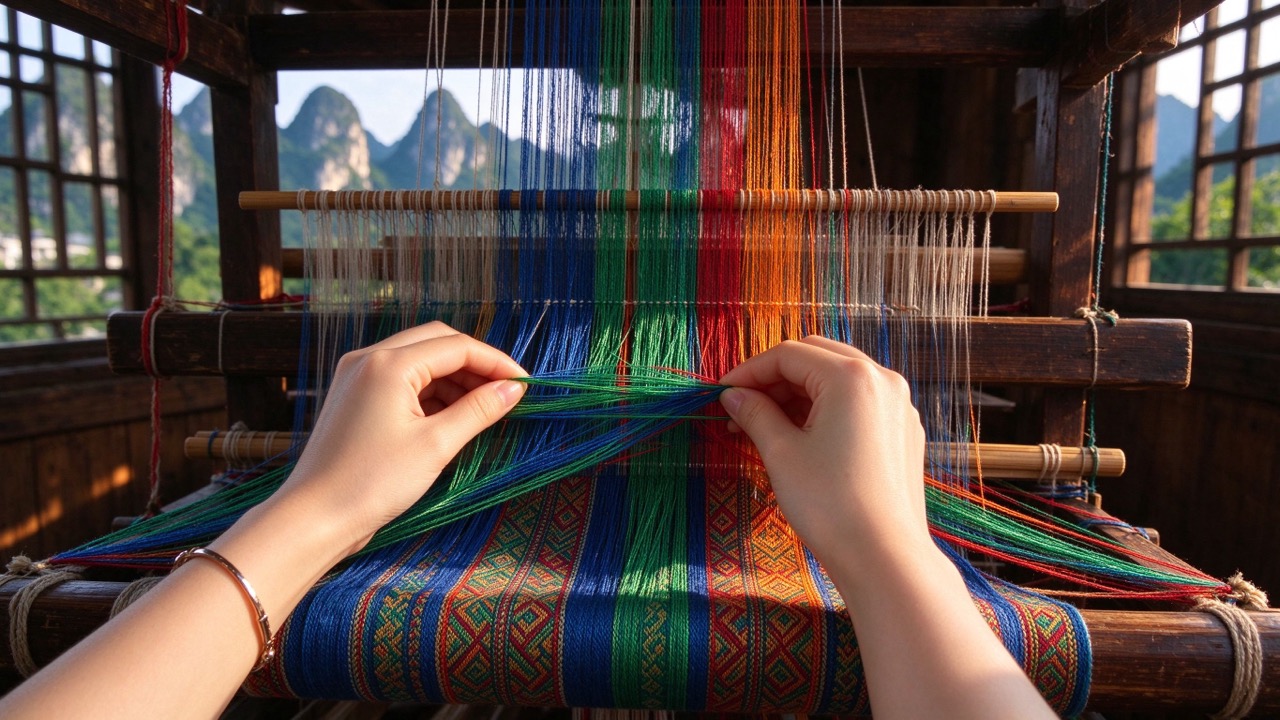
In late May, Andy — a Swiss hotel executive — was one of nearly 2,000 travel industry professionals from 67 countries invited to Guilin for the "Oriental Heritage Playground", a day of hands-on heritage put together by Trip.com Group. He sat down at a Zhuang brocade loom and threaded colored yarn through the frame.
"It's amazing — nothing like this exists in my country," he told reporters from People's Daily's China City News. "After holding these threads that have been passed down for a thousand years, I can understand my Chinese guests much better."
That last sentence is the part that stays with you. Fifteen years of hotel data, and a thread changed his understanding faster.
The mother who got misty-eyed at the end of a weaving class
On the other side of China, in Zhangjiajie, tour operator Li Jieming has watched the same shift happen with his own clients. Three years ago, overseas visitors were a tiny share of his business. Today they are around 60 percent.
His team used to offer the standard sightseeing itinerary. The results were mixed. So they started building in hands-on stops: Tujia brocade weaving, the Baishou dance, traditional silverwork.
A family from Germany spent one afternoon learning Tujia weaving. None of them had ever touched a loom. Their finished cloth was uneven, the patterns imperfect. And when the workshop ended, the mother got a bit misty-eyed — not because the cloth was good, but because it was something they made together, rather than simply a purchase.
"The mountains gave them a view," Li said. "The weaving gave them a memory."
The student who almost lost a dumpling
In Yangshuo, the same instinct shows up in the kitchen. Casper Supeene, a 20-year-old college student from Belgium, signed up for a half-day cooking class that starts with picking ingredients at the market and ends with four dishes: Yangshuo beer fish, smashed cucumber, kung pao chicken and dumplings.
The hardest part, he said, was the dumplings. "The filling sometimes came out, and it was hard to form the pleats neatly. But they are very delicious."
A bank worker from the Netherlands, Niels Jongsma, admitted he had never cooked fish before and struggled with the heat — "I didn't know when it was fully done, but I finally made it." He planned to cook the dishes for family and friends back home.
The class costs about 280 yuan (roughly $41) per person. In June, the school ran around 400 students a month, most of them from Europe and the US.
Why this is happening now
This is not a coincidence of a few good tours. China's visa-free entry has widened to nearly 80 countries; in the first quarter of 2026 alone, foreign visitors made 8.32 million visa-free entries, up 29.3 percent year on year. A Trip.com survey of more than 500 inbound tourism operators found over 80 percent reporting that overseas visitors are increasingly interested in experiences beyond traditional sightseeing.
What travelers ask has changed too. Yang Li, one of China's first nationally certified gold tour guides, put it simply: "Before, visitors listened to whatever you told them. Now they ask why." At the Great Wall, tourists want to know why it appears in China's national anthem. In Shenzhen, Spanish clients ask to see smart factories. In Changsha, Romanian groups request tours of electric vehicle production lines.
What this means if you're planning a trip
If you only see the famous sights, you will still have a great trip. But the part people remember — the part they tell friends about — increasingly happens with their hands: a loom, a wok, a tea field, a calligraphy brush.
You do not need to be crafty. Nobody expects your brocade to be neat. The German family's cloth was imperfect and the mother still cried a little. The point was never the product.
China Travel's quiet shift is simple: sightseeing is what you see, experiences are what you keep. Check chinapie.ai for Guilin, Yangshuo and Zhangjiajie experience pages to find a workshop near your route.
What to do next
选一个'动手'项目排进行程:桂林/阳朔——非遗游乐场(旱地龙舟、蹴鞠、织锦、书法、八段锦)或烹饪课;张家界——土家织锦与银饰工坊;旅行前上 chinapie.ai 查对应体验页,多数项目 50-300 元且无需基础
How to do it
先定城市再选项目:阳朔烹饪课约 280 元/人(中国日报 7-27 报道,含菜市场选菜+四道菜);桂林非遗游乐场以场地票价为准
别怕手笨:德国一家人织的土家锦并不整齐,母亲依然红了眼眶——体验的价值不在成品
不会中文也能去:阳朔烹饪课全程英文教学(Cloud 9 等),织锦/书法类项目靠手势和翻译 App 即可
时间安排:半天足够(3-4 小时),可拆进观光日的下午或晚上
回来后把记忆带走:多数工坊允许带走作品(织物、字、饺子打包),成本约 50-300 元
Watch for
把体验项目当'看表演'——织锦、烹饪课要上手才算数,纯围观等于没体验
只排观光不排动手——报道中多次出现'游客只打卡后觉得缺了什么'的反馈
以为需要手艺基础——报道里所有体验者都是零基础,成品不完美才是常态
忽略英文教学项目——阳朔烹饪课明确全程英文,适合语言顾虑者
What may vary
本文三个故事为公开报道中真实人物与真实引语(人民日报·中国城市报 6-08 桂林非遗游乐场、中国日报 7-03《Immersive travel》、中国日报 7-27 阳朔烹饪课);具体场次、价格、报名人数随季节与平台变化,预订前以实际为准