
I Rode a Robotaxi in Shenzhen and a Robot Dog Walked Past — China Travel Stories | ChinaPie
Shenzhen is China's most future-first travel city: driverless robotaxis, drone food delivery and robot dogs are part of everyday streets. A Polish blogger's video called it 'the real future world'; a British family's drone-delivery clip drew 7.8M views. Visitors can try robotaxis via Pony.ai/WeRide apps and drone pickups in tech districts.
Quick answer
Shenzhen is China's most future-first travel city: driverless robotaxis, drone food delivery and robot dogs are part of everyday streets. A Polish blogger's video called it 'the real future world'; a British family's drone-delivery clip drew 7.8M views. Visitors can try robotaxis via Pony.ai/WeRide apps and drone pickups in tech districts.
Detailed answer
The video that made everyone ask 'wait, what?
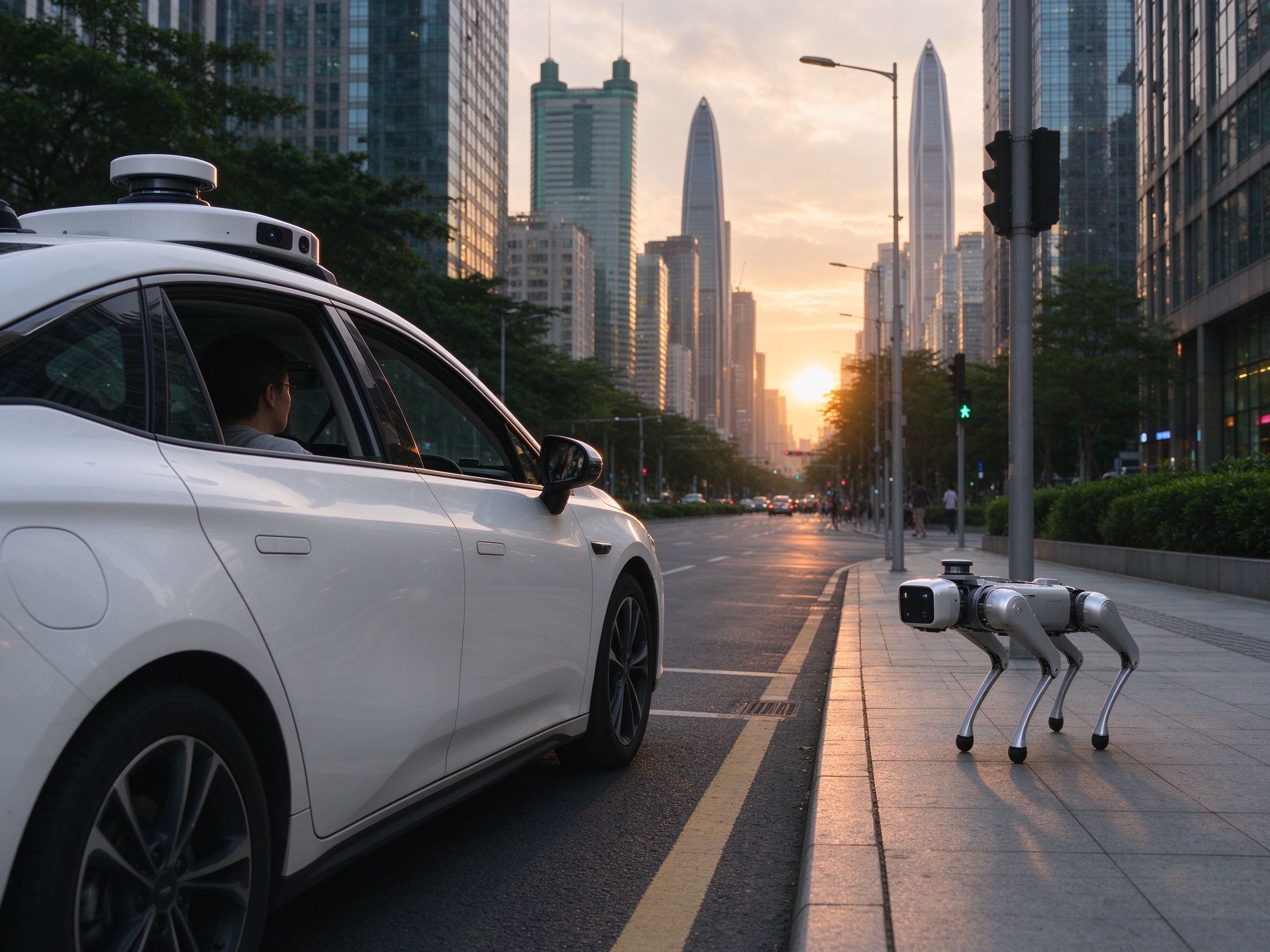
A Polish travel blogger named Wiktoria Wanders posted a video called 'China lives in 2050 - Here's Why!' after a day in Shenzhen. She hailed a driverless taxi, watched it pull up with no one inside, rode through city traffic, then tried an exoskeleton and an AI-powered mattress. On the street, a robot dog trotted past her. Her verdict, in the video: Shenzhen is 'the real future world.'
The video did what travel content rarely does — it made people argue about the future instead of arguing about the weather. And it wasn't an isolated clip. Around the same time, a British family vlogging under the name The Hutchinsons filmed themselves using a drone delivery service in Shenzhen. The reaction — a small door in the sky opens, a box drops down on a line — became their most-watched video ever, with 7.8 million views. An Italian influencer's driverless taxi ride in Guangzhou passed 121,500 views in half a month. Kara and Nate, whose travel videos pull millions of views, tried a robotaxi and drone delivery in Shanghai and their episode has about 1.2 million views.
The common thread isn't tech-geek excitement. It's that these are ordinary travelers, not engineers. They arrive expecting landmarks, and what stops them mid-street is a car with no steering wheel, a drone carrying bubble tea, a robot dog on a sidewalk. That's a different kind of China story than the ones we grew up hearing.
What a first-time visitor actually sees in Shenzhen
Shenzhen is a city built on speed — a fishing coast that became a 600-meter-skyline tech capital in about 40 years. For travelers, the future stuff isn't hidden behind exhibition doors. It's on the daily commute:
- Robotaxis are real rides, not demos. Driverless taxis operate in Shenzhen's downtown areas through apps like Pony.ai and WeRide. You book like any ride-hail, a car arrives with nobody at the wheel, and it drives you through real traffic. Foreign visitors can use them — the apps support international phone numbers.
- Drone delivery is a normal errand. In parts of Shenzhen (and a growing list of cities), food and packages arrive by drone to designated pickup points. You scan, a hatch opens, your order comes down on a tether. It's the most mundane futuristic thing you'll do all trip.
- Robots are part of the street furniture. Robot dogs, delivery robots on sidewalks, AI photo booths, robot baristas — they show up in daily life the way scooters do in other cities.
None of this requires a tech expo ticket or a special itinerary. It's what happens when a city of 18 million treats robotics as everyday infrastructure instead of a tourist attraction.
The emotion that sticks
The reason these videos resonate isn't the technology. It's the moment of recognition — the traveler's face when the car they're sitting in has no driver, when the sky opens up and a drink descends on a string, when a machine says hello back. That feeling of 'I need to tell someone about this' is the most human travel emotion there is.
It's also the part that's hardest to explain to someone who hasn't been. Friends back home don't believe the taxi had no one in it. Family members ask if the drone was a stunt. The travelers' answer is usually the same: no, it was just Tuesday. That gap between what people expect and what they find is honestly half the reason these videos spread. The other half is that everyone who tries it wants to compare notes — which robotaxi app worked, which district had the most robots, whether the exoskeleton was as strange as it looked.
Shenzhen delivers it faster than almost anywhere. You can be riding a robotaxi at 10 am and eating a bowl of noodles delivered by drone by noon. It's the same city where you can hike a hill for a skyline view at sunset, or cross to Hong Kong by metro in an hour. The future and the everyday aren't competing here — they're the same street.
If you want to try it
- Download ride-hail apps that include robotaxi fleets before you arrive (Pony.ai, WeRide, Baidu's Apollo Go where available). Set up payment with an international card where supported.
- For drone delivery, look for Meituan and Ele.me pickup points marked on maps in Shenzhen's tech districts — the hatch stations are often near metro exits.
- Give yourself a 'future morning' in Nanshan or Futian, then spend the afternoon somewhere completely analog — a park, a teahouse, the old Shekou waterfront.
A practical note: apps update their coverage areas often, so check the map inside the app before planning a route around a robotaxi stop. And if you're traveling with kids, the drone pickup hatches usually end up being the highlight of the whole trip — one family's video of exactly that became the most-watched thing they've ever posted.
The best part? A robotaxi ride in Shenzhen costs a fraction of what the same ride would cost with a driver in most world cities. That's the China travel story people don't see coming: the future is here, and it's cheap.
Have you tried a robotaxi in China? Drop your story below — we collect the best ones for our community guide.
What to do next
Download Pony.ai or WeRide before arriving, set up payment with an international card, plan a 'future morning' in Nanshan/Futian for robotaxi and drone pickup, then spend the afternoon at a park, teahouse or Shekou waterfront.
How to do it
Download a robotaxi-capable ride-hail app (Pony.ai, WeRide, Baidu Apollo Go where available) and set up payment with an international card before arriving.
Check the in-app coverage map — robotaxi service areas change — and plan a route in Nanshan or Futian for your first ride.
For drone delivery, find Meituan or Ele.me pickup hatches on the map near metro exits in Shenzhen's tech districts, order, scan, and watch your package descend.
Mix a 'future morning' (robotaxi + drone pickup) with an analog afternoon — a park, teahouse, or the old Shekou waterfront — to feel the contrast.
Watch for
Assuming robotaxis run everywhere in Shenzhen — coverage is limited to designated zones; always verify in the app first.
Expecting the same app to work identically everywhere — different districts and cities use different operators and coverage.
Skipping payment setup — some apps need an international card or wallet configured before you can book a ride.
Treating it as a staged tourist demo — the cars, drones and robots are part of daily city life, not a show.
What may vary
Robotaxi coverage areas, app language support and drone pickup locations change as services expand; verify coverage in the app before relying on a specific route.