
China Haul, Endorsed: Beijing Praises Foreign Shoppers as Pop-Up Queues and Empty-Suitcase Trips Go Mainstream
It started as a social media joke: foreigners flying into Beijing, Shanghai or Chengdu with an empty suitcase and checking in with a full one. On 16 October 2026, China's Foreign Ministry gave the trend its official blessing, describing 'China Haul' as proof that the country is worth visiting, its brands worth buying. Behind the soundbite are real queues outside Chinese brand pop-ups in London and Paris, and a practical set of tools making inbound shopping easier than it has ever been.
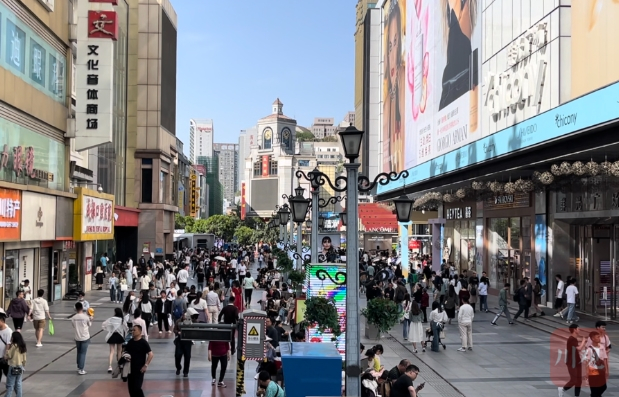
Key takeaway
On 16 October 2026, China's Foreign Ministry spokesperson Mao Ning publicly endorsed the viral 'China Haul' trend, saying she was glad more foreign friends think China is worth visiting, Chinese brands worth buying, and the Chinese way of life worth experiencing (MFA regular press conference, 16 Oct 2026). The trend is backed by hard numbers: visa-free entries by foreigners hit 23.72 million in Jan-Aug 2026, up 26.8% (National Immigration Administration, via China News Service, 16 Oct 2026); overseas shoppers using the departure tax refund scheme more than quadrupled (+366%) in H1 2026, with refund sales up 69% (Xinhua, 11 Oct 2026); and overseas bank-card binding for mobile payment now covers 200+ countries and regions (Xinhua, 11 Oct 2026).
Full report
China's Foreign Ministry Weighs In on 'China Haul
At the regular Ministry of Foreign Affairs press briefing on 16 October 2026, a reporter asked spokesperson Mao Ning about 'China Haul' - the viral habit of foreign travelers flying to China with empty suitcases and flying home with them full. Her answer was warm rather than scripted.
'I am glad that more and more foreign friends believe China is worth visiting, Chinese brands are worth buying, and the Chinese way of life is worth experiencing,' Mao said. 'I believe this reflects the appeal of China's industrial vitality, its street-level bustle and social convenience. China will keep its door open and, through two-way exchanges, help more foreigners understand China and fall in love with China.' (Ministry of Foreign Affairs regular press conference, 16 Oct 2026; also reported by China News Service, 16 Oct 2026.)
The reporter's question itself carried the evidence: queues outside Chinese brand pop-up stores in London and Paris, and tourists arriving light and leaving heavy, she said (MFA regular press conference, 16 Oct 2026).
From Pop-Up Queues to Haul Videos
The pop-up lines are the European chapter. The Asian one plays out on Chinese soil. Xinhua (11 Oct 2026, reporters Bai Jiali and Xu Siyu) described foreign bloggers dragging empty suitcases through customs, their unboxing clips flooding social media with comment sections full of 'where can I buy this?'
The details that stuck were specific. A British sneaker blogger tried on Chinese running shoes at Dongshankou in Guangzhou and called the design crazy (Xinhua, 11 Oct 2026). A Portuguese blogger showed off loquat syrup and Liuwei Dihuang pills, the kind of traditional wellness buy that barely existed in tourist itineraries two years ago. A US music producer unboxed a drone, a handheld gimbal and a wireless microphone. Diana, a Russian tourist in Chengdu's Chunxi Road, told Xinhua the immigration process was efficient and shopping was convenient. A British visitor who toured Tianjin summed it up as 'easy to explore, easier to buy.'
What Actually Goes Into a China Haul
Xinhua's field reporting sorted the purchases into three lanes: luggage and shoes, affordable beauty, and trendy toys with fragrance (Xinhua, 11 Oct 2026). One traveler quoted in the report put it bluntly: the pre-trip research was half sights, half must-buy items.
The point worth noting is what is not on the list. This is not a story of luxury handbags. It is a story of mid-range Chinese running shoes, small beauty brands that cost a fraction of Western department-store prices, gadgets priced far below their home-market equivalents, and a growing category of Chinese wellness products that foreign buyers now actively seek out.
The Numbers Behind the Trend
The official data behind the soundbite is consistent. In the first eight months of 2026, visa-free entries by foreigners reached 23.72 million, up 26.8% year on year (National Immigration Administration, via China News Service · Huayu, 16 Oct 2026). China's unilateral visa-free list now covers 50 countries, and the 240-hour transit visa-free policy has been extended to 57 countries (Xinhua, 11 Oct 2026).
Payment infrastructure has caught up with the crowd. Mobile payment services that let overseas bank cards be bound directly to Chinese wallets now cover cards from more than 200 countries and regions (Xinhua, 11 Oct 2026). The departure tax refund scheme shows the spending pattern: in the first half of 2026, the number of overseas shoppers using the refund scheme rose 366% year on year, while refunded goods sales and refunded amounts both rose 69% (Xinhua, 11 Oct 2026). During the recent National Day holiday, border inspectors handled 15.462 million entry-exit trips, an average of 2.209 million per day, up 6.7% (National Immigration Administration, via Xinhua / Youth Online, 11 Oct 2026).
Cities are building support on top of this. Shanghai's 'Hu Xiao You' visitor service center supports 10 languages and more than 120 currencies (Xinhua, 11 Oct 2026), and Tianjin has packaged 20 curated inbound tour routes (Xinhua, 11 Oct 2026).
Practical Tips for an Empty-Suitcase Trip
Payment comes first. Bind your overseas Visa or Mastercard to Alipay or WeChat Pay before departure; the system now works with cards from 200-plus countries and regions (Xinhua, 11 Oct 2026). Still carry a physical card and some cash - the caveats below explain why.
Spend at registered departure tax-refund stores and keep your receipts. The refund scheme has been upgraded with an instant-refund network of thousands of stores and a 28-day window, and it is worth the few extra minutes at checkout. See our departure tax refund guide for the current rules.
Pack light on the way in. If your planned route includes Shanghai, the 'Hu Xiao You' center can help in 10 languages; for multi-city itineraries, Tianjin's packaged routes are a useful shortcut (Xinhua, 11 Oct 2026).
The Honest Caveats
Official backing does not mean the experience is friction-free. Xinhua (11 Oct 2026) was candid about the gaps: card payment still runs into trouble at some small street shops and county-level tourism businesses; minority-language service staff remain in short supply; and the design of some Chinese products still has room to improve.
For a foreign shopper, the practical takeaway is simple: plan around large chain stores and registered refund shops for big purchases, keep a backup card handy, and treat the trend as a reason to visit rather than a guarantee that every corner of the country will match the highlight reels.
What to do next
Bind your overseas bank card to Alipay or WeChat Pay before departure (200+ countries supported, per Xinhua 11 Oct 2026). Shop at registered departure tax-refund stores, keep receipts, and use the 28-day refund window before your flight out - check our departure tax refund guide for current rules. Pack an empty suitcase, plan big purchases around chain stores, and carry a physical card as backup.
What may vary
Xinhua (11 Oct 2026) reports that card payment still runs into friction at some small street shops and county-level tourism businesses, minority-language service staff are in short supply, and some Chinese product designs still have room to improve. Big cities are far better set up than smaller destinations, and not every shop takes overseas-bound cards.