
China Travel in 2026: Record Visa-Free Numbers and the Price Gap That Keeps Tourists Coming | ChinaPie
Visa-free arrivals hit record highs in 2026 while haircuts, massages and all-night spas cost a fraction of Western prices. The data behind China Travel's value boom, with real prices you can plan around.
Key takeaway
China Travel is 2026's value story: Q3 visa-free arrivals rose 24.1% to nearly 9 million, while local haircuts (¥30–80), massages (¥80–200/hour), Chengdu ear cleaning (¥30/20 min) and all-night spas ($35) cost a fraction of Western prices.
Full report
Here is a number that should make any budget traveller pay attention: in the third quarter of 2026, foreign nationals made 23.27 million border crossings into China — up 15.6% year on year — and nearly 9 million of them entered visa-free, a jump of 24.1%. Official data from the National Immigration Administration, reported by Xinhua in late October, keeps pointing the same way: China Travel is not a passing trend, it is the value story of 2026.
Why the numbers keep climbing
The visa story is the easy part. Visa-free entries made up roughly 77.5% of all foreign arrivals in Q3, and the list of countries covered by unilateral visa-free access and the 240-hour visa-free transit now stretches across 57 nations. From January to August, 23.72 million foreign entries were visa-free — 26.8% more than a year earlier, according to China Daily.
But the policy alone does not explain the momentum. What converts a visa into a holiday is what happens on the ground, and that is where the second number matters: the price gap.
The price gap that turns heads
Foreign visitors keep posting the same discovery — not because they are told to, but because the numbers are so different from home. Real prices, checked across 2026 sources:
- A local haircut runs ¥30–80 (about $4–11). A decent cut in London, New York or Sydney usually starts above $30.
- One hour of Chinese massage costs ¥80–200. Foot reflexology starts at ¥68 at budget spots and tops out around ¥280 at upscale lounges — a range most Western spa menus would call a single treatment.
- Ear cleaning at Chengdu's Heming Teahouse in People's Park is ¥30 for 20 minutes — the same ritual that made foreign bloggers hit millions of views.
- An all-night spa: Irish vlogger Travis Leon paid $35 to stay overnight in a Chengdu bathhouse with every service included — and called it cheaper than a hotel. That video has nearly 10 million views on the platform where it ran, per China Economic Net.
- High-speed rail: Chengdu to Leshan, 41 minutes at 300 km/h, is ¥27–63 in second class — around $4–9.
None of this is a discount-day gimmick. It is the everyday price structure of a country with dense service supply and a strong currency working in the visitor's favour.
What ¥100 still buys
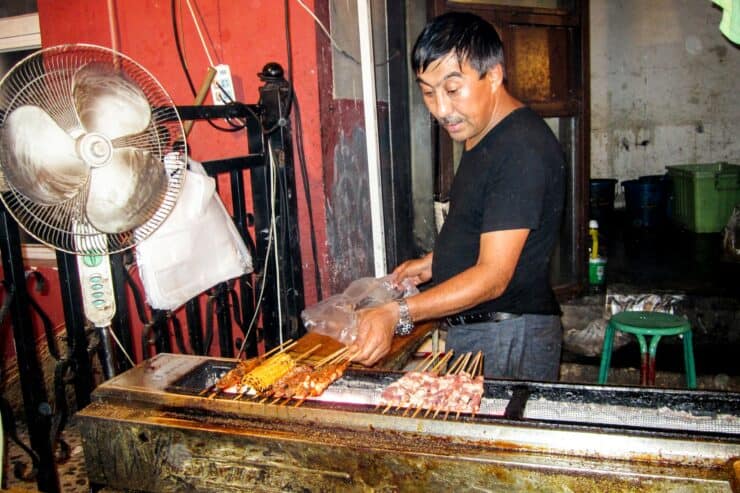
If you want to feel the gap in one evening, a night market is the fastest classroom. We mapped a full 100-yuan night out — oysters, skewers, mango juice, change left over — in our guide to the 100-yuan night-market feast, and a Chengdu ear-cleaning session at People's Park makes a strong second stop.
How to actually do it
- Check your passport against the 57-country transit list or the 50-country unilateral visa-free list before booking.
- Land in a gateway city — Beijing, Shanghai, Guangzhou, Shenzhen — and link a foreign card to Alipay or WeChat Pay at the airport; both accept overseas cards from 200+ countries.
- Pick one experience per city: a night market, a teahouse ear-cleaning, a foot massage after a long walk.
- Keep a rough budget — ¥100–200 covers a full evening of street food and a massage in most cities.
ChinaPie maps these experiences city by city with real prices, so you can see what things actually cost before you land. Start with the night markets or the ear-cleaning guide, then build your own value itinerary.
What to do next
按城市挑选真实价格体验:先看 100 元夜市攻略或成都采耳体验,再在 ChinaPie 上按预算规划行程。
What may vary
价格随城市与门店档次浮动(足疗 ¥68-280/小时区间);汇率波动会改变美元折算;旺季热门门店需排队。