
Chinamaxxing 2.0: Travelers Are Trading Landmarks for Market Hopping in China
Forget the postcard landmarks. The newest Chinamaxxing habit is market hopping: wet markets, backstreet stalls and neighborhood food streets. Here is where to start and what it actually costs.
Key takeaway
Market hopping is the newest Chinamaxxing habit: skipping ticketed landmarks for wet markets, backstreet food stalls and neighborhood teahouses. A full street-food meal runs 30–60 yuan and most spots need no booking.
Full report
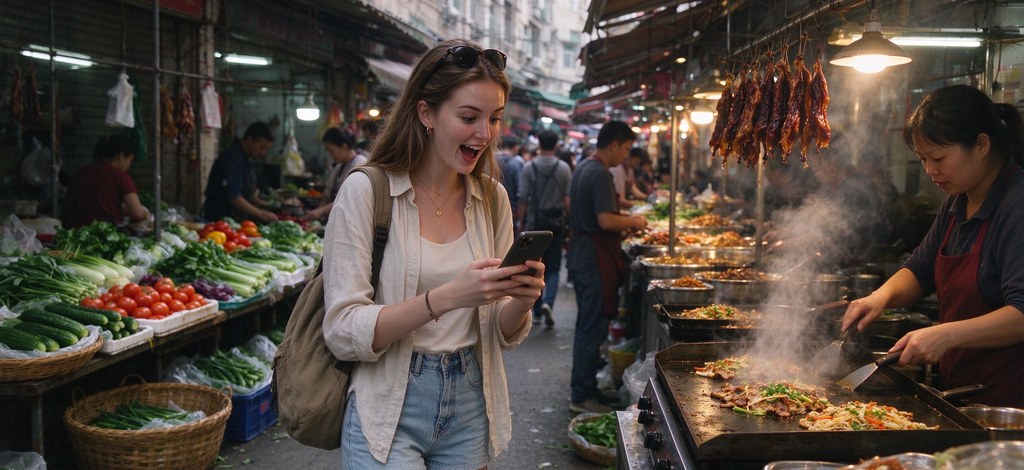
The Chinamaxxing trend keeps mutating. The first wave was about doing everyday Chinese things: drinking hot water, riding the metro, scanning QR codes. The second wave, visible across Douyin and Xiaohongshu clips this fall, is market hopping — spending an afternoon wandering a wet market, a food street or a neighborhood courtyard instead of a ticketed sight.
From Landmark to Neighborhood
Chengdu's culture and tourism bureau flagged the shift this summer: foreign visitors are now regulars at places like the Sishisi wet market, where a qipao tailor says overseas orders now make up close to a third of her monthly revenue, including a Spanish traveler who came in for a custom plain silk qipao. The same pattern shows up in Yangzhou, where teahouses release more than 700 numbers for morning tea sessions and turn tables seven or eight times between breakfast and lunch.
The Golden Week Numbers
National Golden Week data made the shift concrete. In Jiangsu, Xuyi's riverfront crayfish festival served about one tonne of crayfish a day during the first six days of the holiday, while Xuzhou's 'Thirteen Heavies' food week lifted local restaurant sales by 60 percent year over year. None of these are tourist attractions in the traditional sense — they are places where locals simply live.
What Market Hopping Actually Costs
A full street-food meal in most cities runs 30–60 yuan (about 4–8 USD), and a wet-market snack crawl can be kept under 20 yuan. For the price of one museum entrance ticket, a traveler can eat across three stalls, watch a qipao being measured, and leave with a bag of fruit. The value gap versus the same experience in Tokyo, Seoul or Paris is the reason the format keeps going viral.
How to Do It Right
Start where locals queue, not where the guidebook points. Go early for wet markets (6–9 a.m.) and late for food streets (after 7 p.m.). Bring a translation app with photo mode for menus and signs, and keep small notes for stalls that do not take cards. In Chengdu, the market is a half-day plan: a qipao fitting in the morning, dan dan noodles at lunch, and the night market after dark.
Where to Start
Chengdu's Sishisi market, Yangzhou's morning teahouses, Xuyi's crayfish night market and Nanning's Zhongshan Road food street are all open to walk-ins. None require booking, which is exactly the point — the best version of China Travel right now is the one you stumble into.
What to do next
Pick one city, go early to the wet market, return at night for the food street, and keep a translation app handy.
What may vary
Prices and stall hours vary by city; some stalls are cash-only and menus are rarely in English.