
China Travel: The Rocket-Cloud Night That Stopped Six Provinces — and How to Chase It
A jellyfish rocket cloud lit up six provinces. How to plan a China Travel rocket-watching trip: launch sites, official windows, visa-free tips. Plan now.
Key takeaway
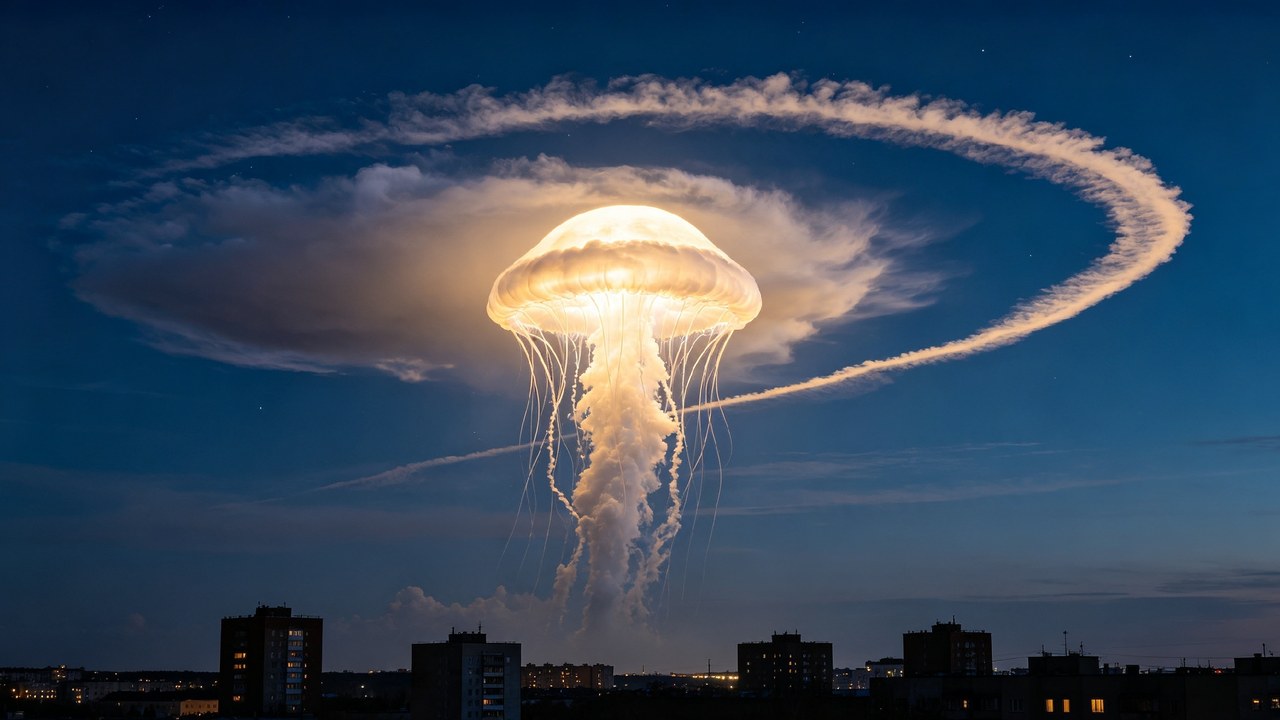
A Long March 6A rocket launched from Taiyuan on Oct 23, 2026 at 18:15 Beijing time, creating a jellyfish-shaped rocket cloud visible across six provinces. Travelers can plan rocket-watching trips around Wenchang (Hainan) and other sites, using Hainan's 30-day visa-free (61 countries) or the 240-hour transit visa-free (57 countries).
Full report
On Friday night, people across six provinces put down their phones and just looked up.
A Long March 6A rocket launched from Taiyuan at 18:15 Beijing time, carrying the Yaogan-50-03 satellite into orbit. For a few minutes the sky did something no filter could fake: a glowing, jellyfish-shaped cloud drifted over rooftops from Shandong to Beijing, Shanxi to Hebei.
Chinese state media called it "the romance of Chinese aerospace, caught in one glance." Photographers call it a rocket cloud — technically a twilight effect, when water vapor from a liquid-oxygen-kerosene engine freezes into ice crystals high in the atmosphere and catches the last sunlight after the ground has gone dark. It lasts 5 to 20 minutes. It needs clear skies, the right launch time, and the right viewing spot — all at once.
Which is exactly why it is becoming the next thing travelers want to chase.
Rocket-chasing is already a China Travel trend
Chinamaxxing — the viral trend of foreigners going all-in on Chinese daily life, with over 40 billion hashtag views — already has rocket-watching on its checklist. Foreign visitors heading to Wenchang, Hainan to watch launches have become a fixture of the trend. Now that this week's jellyfish cloud is lighting up social media, more first-timers are asking the same question: how do I plan a trip around a rocket launch?
How to actually do it
Pick your launch site. Wenchang Space Launch Site in Hainan is the most traveler-friendly — a coastal site with open viewing areas around the perimeter, beaches and resorts nearby. Taiyuan (Shanxi), Jiuquan (Gansu) and Xichang (Sichuan) host most missions, but viewing is from surrounding cities and open ground, not inside the base.
Follow the official window. Launch dates are announced in advance through official channels — China Manned Space Engineering Office, CCTV News and state media. Windows can slip, so leave a buffer day. Official sources only, no rumors.
Pair it with visa-free entry. Hainan's 30-day visa-free policy now covers 61 countries: you can land in Haikou or Sanya and catch a Wenchang launch without a visa. The 240-hour transit visa-free (57 countries) also works for multi-city trips — many launch nights are visible from several provinces at once, like Friday's cloud seen across six.
Bring a tripod. Rocket clouds show up in twilight, just before sunrise or after sunset. A long exposure turns a thin trail into that glowing jellyfish — a basic tripod and a phone with night mode are enough.
Plan around big weeks. APEC Leaders' Week hits Shenzhen November 14–19, the same month the aerospace calendar stays busy. Combine a launch watch with a Shenzhen tech itinerary and you get a week that reads like a Chinamaxxing starter pack.
👉 Follow the APEC Shenzhen hub for live guides: https://chinapie.ai/business-support/apec-shenzhen/ 👉 Also live now: the Canton Fair hub — https://chinapie.ai/business-support/canton-fair/
Sources: CCTV News (2026-10-24); People's Daily (2026-10-24); Beijing Daily (2026-10-24); Jinyang Net (2026-10-24); China News (2026-08); National Immigration Administration (2026-08-20).
What to do next
Follow official launch windows from China Manned Space Engineering Office or CCTV News, pick Wenchang as the most traveler-friendly viewing site, pair it with Hainan visa-free entry, bring a tripod for twilight long exposures, and leave a buffer day for window slips.
What may vary
Launch windows can slip by hours or days; viewing spots inside launch bases are not open to the public; rocket clouds require clear skies, twilight timing and good viewing distance — they do not appear every launch; verify current visa rules before travel.