
Chongqing's '8D City' Is the New Frontier of China Travel — Foreign Passengers Just Hit a Record 610,000
Chongqing's '8D city' drew 610,000 foreign passengers in H1 2026, up 86% — Liziba's train-through-building, Hongya Cave nights, Yangtze cable car. Here's why overseas travelers keep coming.
Key takeaway
Chongqing — China's '8D mountain city' — became a top Chinamaxxing destination in 2026: foreign passenger traffic at Jiangbei airport hit 610,000 in H1 (up 86% YoY), inbound visitors reached 1.448 million (up 56.8%), and overseas influencers keep posting the train-through-building, Hongya Cave's neon stilt houses and the Yangtze cable car.
Full report
Chongqing isn't a city you visit — it's a city that breaks your sense of space. And in 2026, international travelers can't get enough of it.
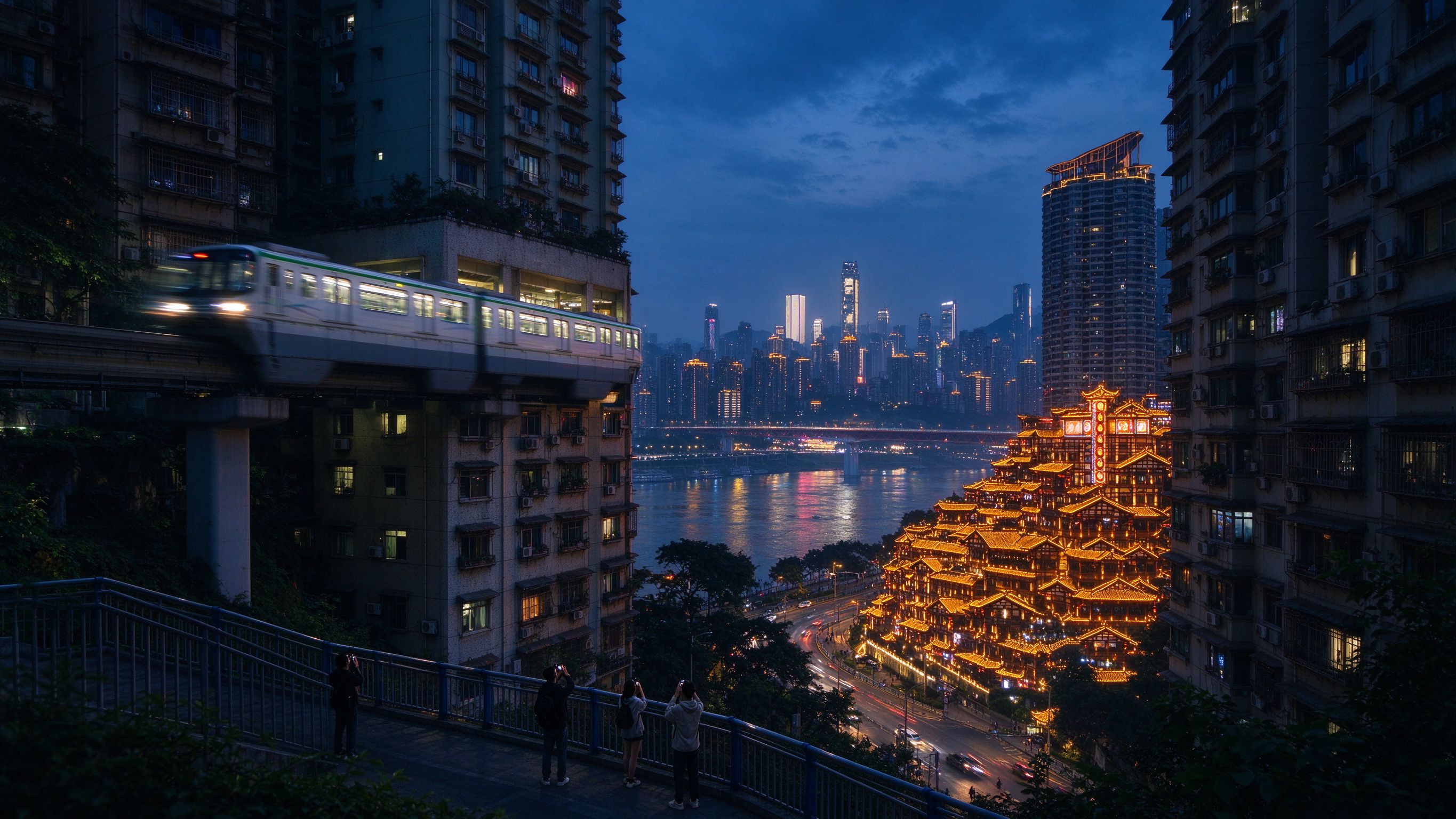
Chongqing, China's '8D mountain city', has become one of the most talked-about Chinamaxxing destinations of the year. The nickname comes from the terrain: streets stack on top of each other, metro lines dive 40 floors underground, and the city's famous monorail at Liziba runs straight through the 6th–8th floors of an apartment building. Stand at the viewing platform and you'll see travelers from every continent holding up phones, waiting for the train to slice through the building.
The Numbers Behind The Hype
The hype is backed by real growth. In the first half of 2026, foreign passenger traffic through Chongqing Jiangbei International Airport reached 610,000 — up 86% year on year, the fastest growth among China's top-ten airports. Total inbound visitors hit 1.448 million, up 56.8%. Departure tax-refund sales jumped 72.2% to 113.8 million yuan (about $17 million), as visitors fill suitcases with local goods before they fly home.
The international media has noticed. In August, 11 overseas influencers from the US, Russia, Australia, Italy, Poland, India, Thailand and Indonesia joined an 8-day 'So Cool! Let's DRIVE in Chongqing' self-driving tour, posting the city's skyline, karst scenery and 8D streetscapes to millions of followers. Xinhua's 'Unexpected China' series and CGTN have both profiled why the city breaks so many visitors' expectations.
What To Actually Do (On A Budget)
- Liziba train-through-building. Free viewing platform; ride Line 2 for the full effect. Best at golden hour.
- Hongya Cave at night. 11 floors of stilt-house lantern streets over the river — looks like a scene from a fantasy film once the lights come on.
- Yangtze River cable car. A few yuan for a crossing with skyline views.
- Hotpot in an air-raid shelter. Chongqing's WWII shelters have been converted into hotpot halls — cheap, loud, and completely local.
- Ride the deepest metro platform. Chongqing's Line 9 goes about 40 floors underground; a surreal five-minute escalator descent.
Most of these experiences cost under $20. That's the 'China Travel' value story in one city: world-class wow at a fraction of Western prices.
Getting Around Is Getting Easier
Chongqing is actively serving its growing visitor base — from late September 2026, metro stations at Chaotianmen, Xiaoshizi and Liziba began trialing Thai-language announcements, following a surge in Southeast Asian visitors (Thailand ranked first among foreign arrivals during this year's May Day holiday).
Why It Fits A China Travel Trip
Chongqing delivers what the Chinamaxxing wave is really about: experiences you cannot get anywhere else — a train through a building, a city that changes floors when you walk, hotpot in a war-era tunnel. It's dramatic, it's cheap, and right now it's one of the most-photographed places in China.
Based on H1 2026 reporting from iChongqing, People's Daily Chongqing, Xinhua Chongqing, CGTN and Trip.com travel notes. Figures are official statistics; ticket prices are approximate and vary by season.
What to do next
Add Chongqing to a China Travel itinerary as a 2-3 day city break: watch (and ride) the Liziba monorail pass through a residential building from the free viewing platform, wander Hongya Cave's 11 floors of stilt-house lantern streets at night, cross the Yangtze by cable car, and try a hotpot meal in a converted air-raid shelter — most experiences cost under $20.
What may vary
Train headways and viewing-platform crowds at Liziba vary by time of day; Hongya Cave and Yangtze cable car can have long queues on weekends and holidays. Some 8D experiences — like the deep metro platforms — are free, while attractions like cable car rides charge a few yuan.