
China Travel 2026: Hangzhou's 'Matcha Forest' Is the New Viral Spot for Foreign Visitors
Foreign visitors found Hangzhou's Qingshan Lake 'matcha forest' before the crowds did: 600k visitors in H1 (+58%, half of growth international), up to 1,000 foreign visitors a day. Boardwalks, swans, a 40-RMB ticket and a metro ride from town.
Key takeaway
Hangzhou's Qingshan Lake 'matcha forest' (Lin'an district) went viral among foreign visitors: H1 2026 600,000 visitors (+58% YoY, half of the growth international), up to 1,000 foreign visitors/day and 50,000+ over H1 (Trip.com Moments, Sep 29 2026). Boardwalk through cypress standing in duckweed-green water, black swans and deer; free lakeside greenway; core area 40 RMB (student half price, Hangzhou Culture & Tourism Card 29.9 RMB/year gives free entry); Metro Line 16 Babaili C1 exit, 10-min walk; open 8:00-17:00 (last entry 16:30).
Full report
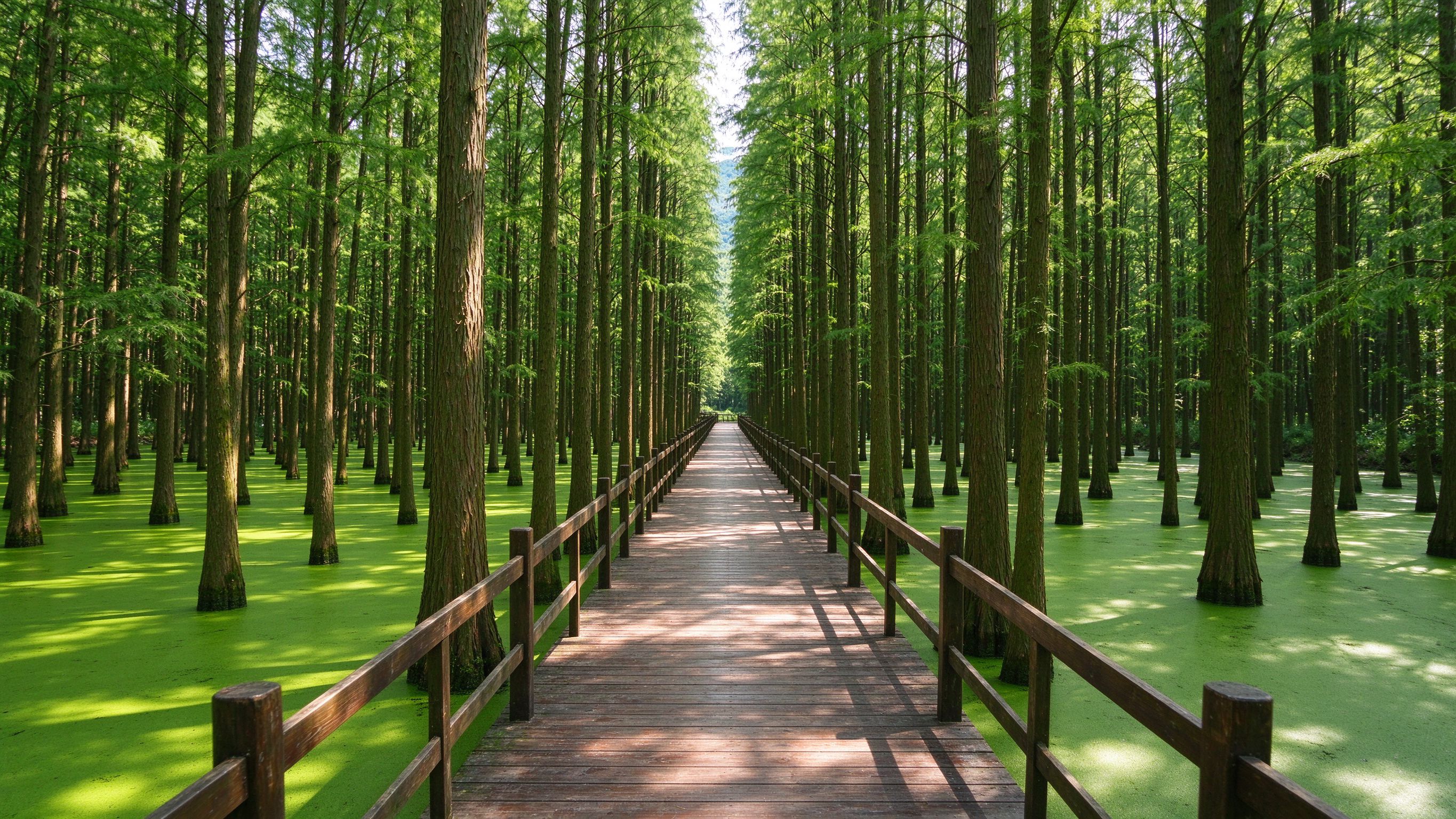
A Russian tourist visiting Qingshan Lake this week looked around and delivered the verdict that's been spreading across overseas social media: "It's so beautiful — this place is already famous abroad." The spot she was standing in is a flooded forest of bald cypress trees in Hangzhou's Lin'an district, where the lake surface turns bright matcha green in warm months. Locals call it the matcha forest. Foreign visitors now call it a must-see.
Why it blew up
The water forest at Qingshan Lake is a seasonal landscape: when warm weather kicks in, duckweed spreads across the lake and carpets the water in an intense green, while tens of thousands of pond cypresses rise straight out of the lake. Walk the elevated boardwalk through the trees and it looks like a real-life fantasy backdrop — which is exactly why the footage keeps going viral.
The numbers back the hype. In the first half of this year the scenic area welcomed 600,000 visitors, up 58% year on year — and half of that growth came from international tourists. Foreign visitor numbers reached up to 1,000 a day at peak, with more than 50,000 over the half year. Young travelers from Vietnam, Thailand and Malaysia have turned the lake into a regular stop on their China itineraries, and the spot got another boost when diver Quan Hongchan name-dropped it during the National Day holiday. CCTV's CGTN first covered the matcha-colored forest back in May as one of Hangzhou's latest viral attractions.
What to actually do there
The classic combo is simple:
- Walk the water forest boardwalk. This is the core of the scenic area — boardwalks thread through cypress trunks standing in the green lake, with dappled light coming through the canopy. It's also where you'll spot black swans, mallards and, sometimes, deer.
- Ride or hike the free lakeside greenway. The area outside the paid zone is a ring road along the lake — flat, scenic and perfect for an easy bike ride or stroll.
- Look for the FARMER BOB art installations scattered around the scenic area, a favorite photo stop for younger travelers.
Practical details (the part everyone asks about)
- Getting there: Take Hangzhou Metro Line 16 to Babaili station, Exit C1, and walk about 10 minutes to the water forest north gate. Alternatively get off at Qingshan Lake station, Exit D, and take the 1-yuan shuttle bus on holidays. From downtown Hangzhou it's about a 40-minute drive — set your navigation to "Qingshan Lake Water Forest North Gate" or "Liuzhuang Station Parking".
- Tickets: The water forest core area costs 40 RMB (half price for students). The Hangzhou Culture & Tourism Card (29.9 RMB per year, search it in Alipay) gives free entry — a steal if you plan more than one visit. The lakeside greenway is free all day.
- Hours: 8:00–17:00, last entry 16:30.
- Parking: 5 RMB/hour at the lake lots, capped at 30 RMB/day.
The value angle
This is where the matcha forest fits the China travel story: a surreal, photo-first natural attraction for about 6 USD — less than the entrance fee to a lot of city aquariums and theme parks back home. Compare that with similar "insta-nature" spots in Japan or South Korea and the gap gets obvious fast.
How to build it into a trip
Most visitors pair Qingshan Lake with a Hangzhou city itinerary: West Lake in the morning, metro Line 16 out to the matcha forest in the afternoon, then back for a night-market dinner. If you're on a longer Zhejiang loop, Lin'an also sits near Tianmu Mountain and Daming Mountain for hiking add-ons — the same high-speed rail and 240-hour visa-free entry covers all of it. Our Hangzhou and Zhejiang guides walk through the details.
Sources: Hangzhou-based media report on foreign visitors at Qingshan Lake (Oct 18 2026); CGTN, "Hangzhou's matcha-colored forest becomes tourist hotspot" (May 8 2026); Trip.com Moments guide updates (Sep–Oct 2026); scenic area details from Ctrip travel notes and Douyin guide videos (2026). Visitor figures: scenic area H1 statistics cited in Trip.com Moments (Sep 29 2026).
The takeaway
Hangzhou already owns West Lake. Now it owns the matcha forest too — and foreigners found it before the crowds did. At 40 RMB and a 10-minute walk from the metro, it's the easiest viral landscape on a China itinerary right now.
What to do next
Pair Qingshan Lake with a Hangzhou itinerary: West Lake in the morning, Metro Line 16 to the matcha forest in the afternoon, night-market dinner back in town. Bring a foreign-card-linked Alipay for the 40 RMB ticket or buy the 29.9 RMB/year Culture & Tourism Card; entry closes at 16:30 so arrive by mid-afternoon.
What may vary
The matcha-green duckweed effect is seasonal (warm months); autumn brings golden foliage instead. Visitor counts are scenic-area H1 figures cited by Trip.com Moments and may be revised; weekend and holiday crowds can be heavy; the 1-yuan shuttle runs on holidays only.