
Chongqing's '8D City' Is the New Frontier of China Travel — Foreign Passengers Just Hit a Record 610,000
Heihe's border night market drew Russian tourists across the Amur all summer — 78M yuan by Aug 30. Budget $4-11 for the night. China Travel border-town guide.
Key takeaway
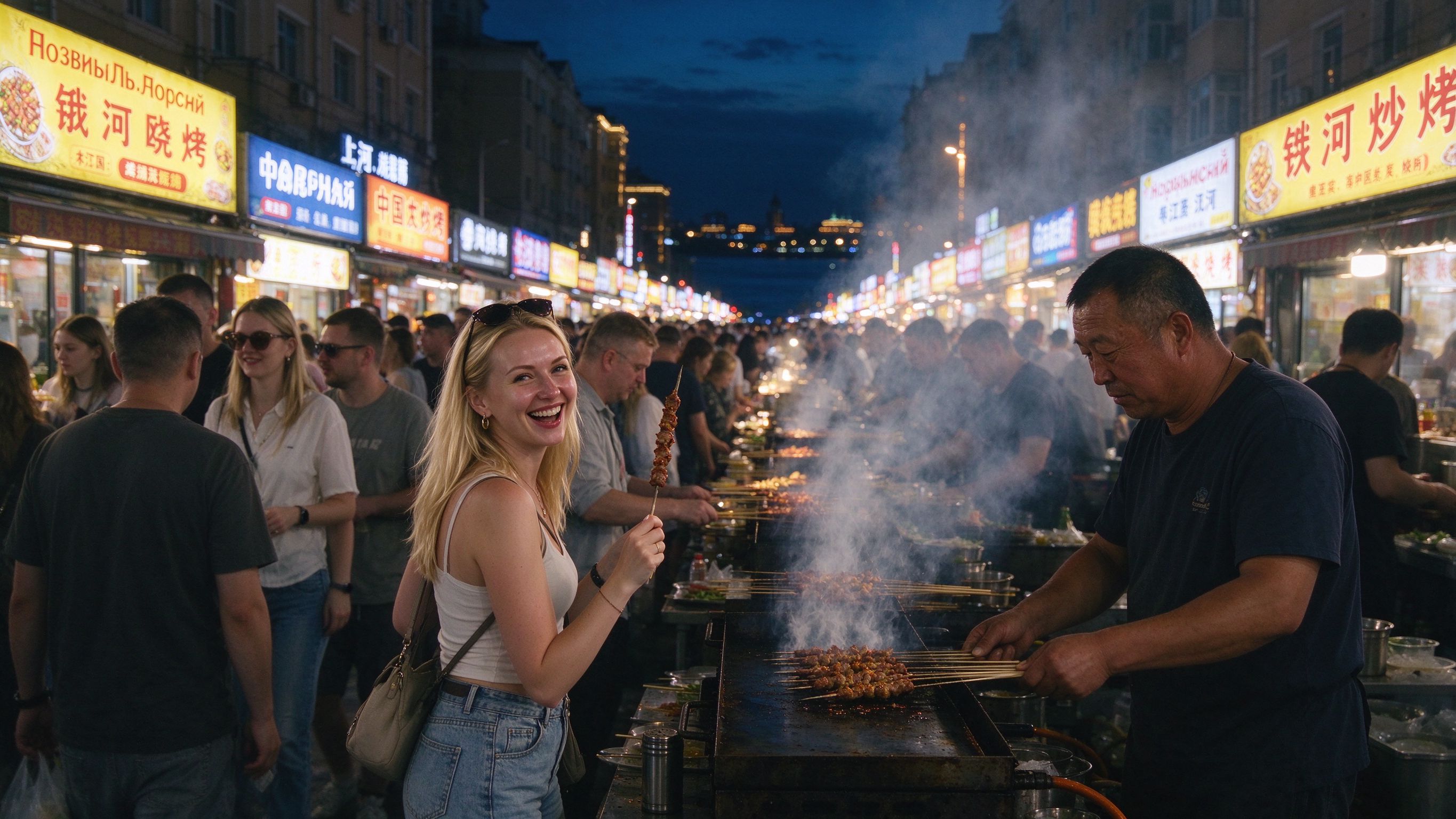
Heihe's Aihui International Night Market — a 600-meter border-town street in Heilongjiang — became a cross-border food hot spot in 2026: Russian tourists walk over (or boat across) the Amur River to snack, shop and trade banter with vendors. From its April 15 opening to Aug 30, vendors earned about 78 million yuan, with daily crowds around 15,000.
Full report
Heihe isn't on most China Travel itineraries. That's exactly why the international travelers who find it never forget it — and why a 600-meter night market on the Amur River became one of 2026's quietest cross-border success stories.
Stand at the riverside in Heihe, a small city in Heilongjiang province, and you can see Russia across the water. When the Aihui International Night Market reopened on April 15, 2026, that proximity became the point. Russian tourists — some on visa-free group trips, some on the air-cushion boats that run across the river — poured into the street for grilled skewers, hot-and-sour noodles and cold kvass. Vendors answered them in Russian. No translation app required.
The Numbers Behind The Street
The border-town hustle is backed by hard numbers. From opening day to August 30, the market's vendors earned about 78 million yuan (roughly $11 million). Opening day alone drew more than 30,000 visitors and 1 million yuan in sales; in steady operation the street averages about 15,000 visitors and 500,000 yuan per day.
Heihe's wider travel boom explains the crowds. In the first half of 2026, the Heihe port handled over 568,000 border crossings, up more than 60% year on year, and the city hosted 11.375 million tourists (+19%) — a lift driven by visa-free group travel and Russian cross-border shopping trips.
Why It Feels Like Nothing Else
The market has upgraded from a pure food street into a cross-border experience zone: 268 stalls along the main stretch, mixing northeast Chinese street food with Russian goods — smoked fish, Russian chocolate, kvass, handcrafts and lightweight souvenirs. Bilingual signs glow overhead while barbecue smoke drifts toward the river.
What makes it special isn't just the food, though. It's the everyday cross-border texture: a Chinese vendor bantering in Russian, a Russian family debating which skewer stand to try next, locals and visitors sharing tables under the same string lights. For travelers chasing "real" China, this is a border-town night you can't get in Shanghai or Beijing.
How To Do It (On A Budget)
- Go at night. The market is an evening experience; arrive after 7pm when the stalls are fully lit and the riverfront breeze kicks in.
- Budget 30-80 yuan ($4-11) for a full evening — a few skewers, a bowl of noodles, a drink and something to take home.
- Try the crossover picks: grilled skewers next to Russian chocolate, cold kvass after spicy noodles.
- Pair it with a border day: watch the Amur River from the riverside, and time a visit to catch the summer "100-Day Action" season when bilingual signage and cross-border payment options are at their best.
- Add 1-2 days to a Harbin or northeast China itinerary — Heihe is the cheapest, easiest cross-border food experience China Travel offers right now.
For most visitors, a border-town night market is a detour. In 2026, it's becoming the detour travelers tell their friends about — one Russian-bantering barbecue stand at a time.
What to do next
Add Heihe as a 2-day border-town stop on a China Travel itinerary: cross or watch the Amur River from the riverside, walk Aihui International Night Market after dark (grilled skewers, Russian chocolate, kvass and handcrafts), and budget roughly 30-80 yuan ($4-11) for a full evening of eating and snacking.
What may vary
Hours and stall mix shift by season; the market runs spring through autumn with the warm-weather border season. Holiday weekends bring bigger crowds and longer waits at the most popular stalls. Some Russian-language menus and bilingual signage are expanding gradually.