
From Sightseeing to Night Strolls: How Golden Week 2026 Is Rewriting the China Travel Itinerary
Golden Week 2026 China Travel is shifting from sightseeing to night strolls: night markets, light shows and street food lead inbound growth of 20%+.
Key takeaway
Golden Week 2026 China Travel is shifting from sightseeing to night strolls: night markets, light shows and street food now drive much of the inbound tourism growth.
Full report
What Changed
The numbers coming out of Golden Week 2026 point to a shift that has been building all year: international visitors are no longer just seeing China — they are living in it.
Ctrip data reported by Xinhua shows inbound travel growing in double digits over the holiday. Russia leads the way with a 173% year-on-year jump in arrivals, while the UK, Malaysia and Canada all grew more than 50%. The source markets are spreading, too — beyond East Asia's close neighbors toward Europe and Oceania, as the global China Travel wave keeps widening.
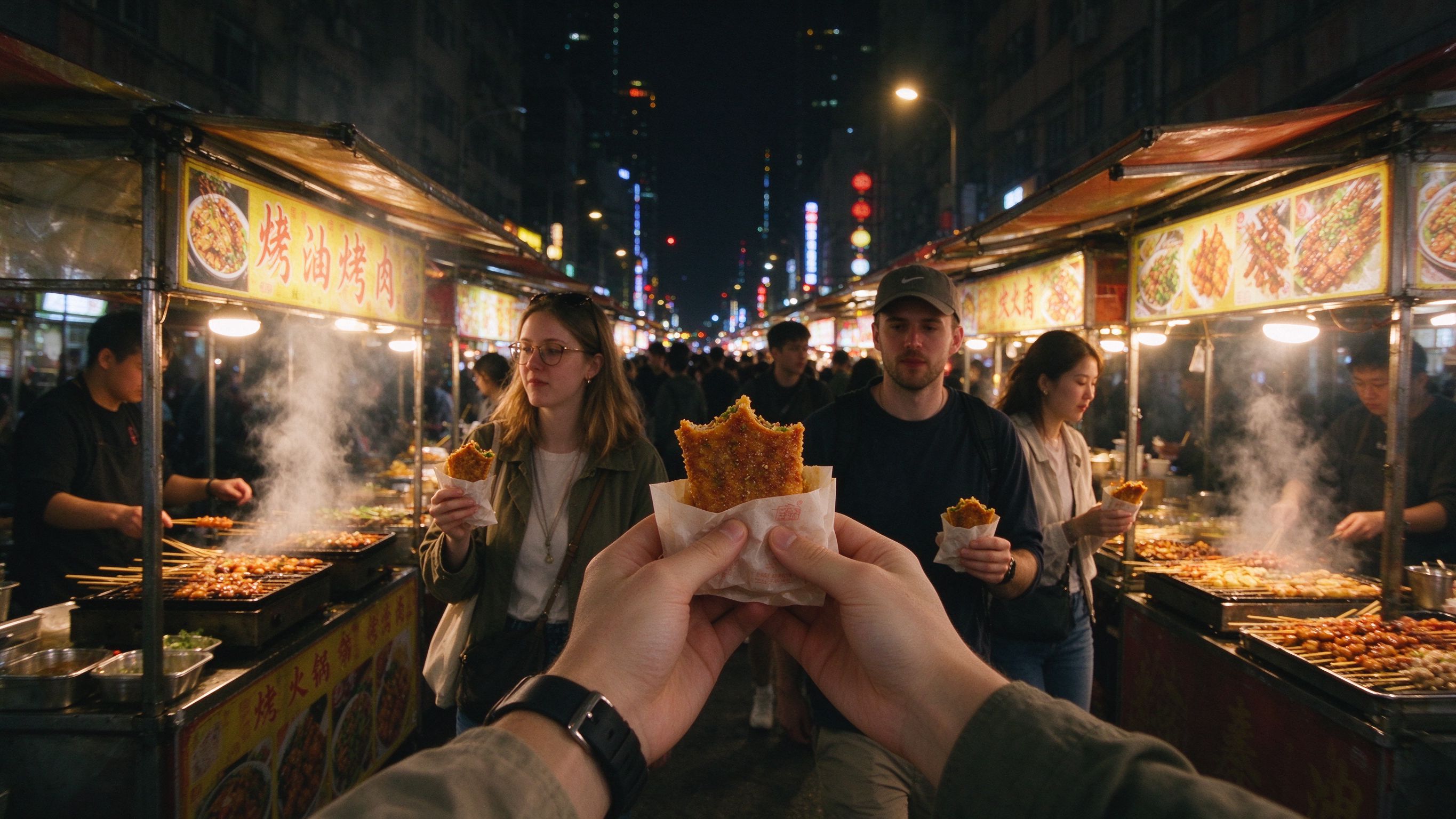
The bigger story is where those travelers spend their evenings. This week's state media coverage keeps returning to the same scene: foreign visitors in night markets, on riverside walks, at light shows, ordering street food with their phones in hand. CCTV's National Day coverage describes overseas tourists moving from seeing China to experiencing China — a Dutch visitor spending three days in Zhangjiajie, a French traveler going deep into local life instead of sticking to the big-ticket sights.
Where travelers are heading after dark
Nightlife has quietly become the backbone of the new China Travel itinerary. Visa-free entry keeps expanding, and the 240-hour transit visa has made short, spontaneous trips easier than ever. CGTN data shows foreign arrivals hit 22.91 million in the first half of 2026, up more than 20% year on year, with visa-free entries growing 30.6%. Night markets are the cheapest, fastest way for those travelers to feel a city — no reservation, no ticket, no translation app required for a first bite.
Operators report the same thing from the ground: food streets from Chengdu's Yulin to Shanghai's old lanes are seeing lines that stretch past midnight. The spending follows the crowd. Ministry of Commerce data cited by Xinhua shows overseas visitors spent 26.36 billion yuan (about $3.9 billion) in China in the first seven months of 2026, up 27.8% year on year — much of it on food, transport and the kind of small experiences that don't show up on a classic tour itinerary.
What it means for your first trip
If you are planning a first visit, the takeaway is practical: your itinerary does not have to be a monument checklist. One well-chosen night market, one riverside walk, one light show can give you more of a city's character than a full day of bus tours — at a fraction of the cost. That is the pricing gap that keeps surprising first-timers: a street-food dinner with drinks for two often costs less than a single tourist-trap meal back home.
The new rhythm looks like this: sleep in, explore one neighborhood, then let the city show off after dark. Sort out the logistics before you go — subway lines, closing times, how to pay without cash — and keep your evenings flexible enough to follow a good crowd. Start with one city, one night, one street you have never heard of. That is often where the trip becomes a story.
What to do next
Build your itinerary around one neighborhood and one night experience instead of a monument checklist: pick a night market, check subway lines and closing times, prepare cash-free payment, and keep evenings flexible.
What may vary
Visitor numbers and spending figures come from third-party and official sources (Ctrip via Xinhua, CGTN, Ministry of Commerce via Xinhua); individual cities and experiences vary by season, location and crowd levels.