
17 Days to APEC: Shenzhen's 40-Year Leap from Fishing Village to Tech Capital — China Travel | ChinaPie
In 1980 Shenzhen was a fishing village. In 2026 it hosts APEC. Here's how the city's 40-year leap from paddy fields to 600-meter towers became one of China's best travel stories.
Key takeaway
Shenzhen grew from a 1980 fishing village of about 30,000 people into an 18-million tech metropolis in 40 years — now hosting APEC from November 14. Travelers can see the whole arc in a day: museum, Shekou industrial relics, Huaqiangbei tech markets, and the 599-meter skyline at dusk.
Full report
What Changed
Seventeen days before APEC opens in Shenzhen (November 14), the city is telling its own origin story — and it's a wild one. In 1980, Shenzhen was a cluster of fishing villages and paddy fields across the border from Hong Kong, with roughly 30,000 residents. Today it is a metropolis of about 18 million people, home to the 599-meter Ping An Finance Centre, and the headquarters or birthplace of companies the world actually uses: DJI, Tencent, BYD, Huawei.
That transformation is compressed into one human lifetime — about 40 years. The shorthand locals still repeat: a fishing village became the world's fastest-built megacity, then its tech capital. Shenzhen's GDP grew more than ten-thousand-fold over those four decades, and the city now regularly ranks among China's top three by economic output.
Why It Matters for Travelers
Most first-time visitors land in Shenzhen expecting a generic business district. Instead they walk into a working museum of China's economic rise — and it's free to explore. The story is visible from ground level: the 1985 Guomao Tower where builders set the "three days per floor" Shenzhen Speed record; the Shekou industrial zone where the slogan "Time Is Money, Efficiency Is Life" was first painted in 1984; the Huaqiangbei electronics streets that turned into China's gadget bazaar; and the futuristic bayfront skyline that hosts APEC this November.
For travelers, Shenzhen is also the easiest Chinese city to arrive in unprepared: it's a 15-minute metro hop from Hong Kong, and the new Huanggang port crossing gets visitors through in about five minutes. You can see the whole 40-year arc in a single day — old village relics in the morning, a tech market at noon, and the 600-meter skyline at dusk.
What to Know Before You Go
- The 240-hour visa-free transit now covers 57 countries, which includes most APEC economies — most visitors can enter Shenzhen without a visa for up to 10 days. Check your passport country against the current list before booking.
- The story is layered, not just towers: Lianhuashan (Lotus Hill) Park has the bronze statue of Deng Xiaoping overlooking the city; Shekou's Sea World is where the "opening up" era physically started.
- Metro payment works with international cards at the gates — tap, no app setup needed. WeChat Pay and Alipay also accept foreign cards for the rest of the city.
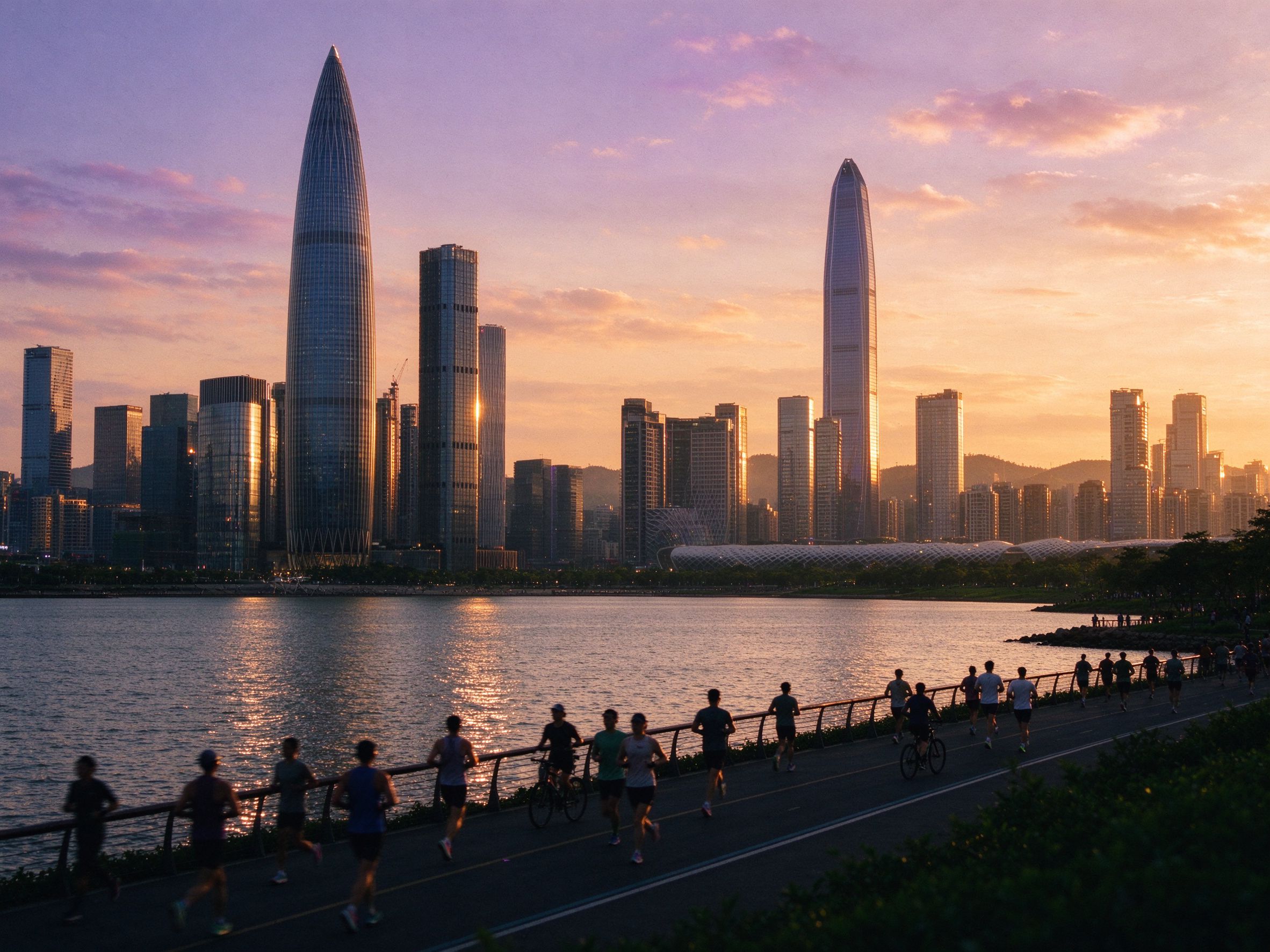
- The skyline is best at dusk from Shenzhen Bay Park, where the bayfront boardwalk faces the whole financial district, and the night market street food starts rolling out after 7pm.
How to Experience Shenzhen's Story Like a Local
- Start at the Shenzhen Museum's modern history hall — the dioramas show the 1980 fishing village baseline you'll compare everything against.
- Take the metro to Shekou and walk the old industrial waterfront; the "Time Is Money" spirit is still visible in the repurposed factory buildings.
- Ride up to the observation deck of the Ping An Finance Centre for the 599-meter view, then cross the street to the Huaqiangbei markets for a hands-on tech crawl.
- End at Shenzhen Bay Park at golden hour, then follow the crowds into a nearby night market for street food.
If You Only Have Half a Day
Skip the museum. Go straight to Lianhuashan Park for the viewpoint over the central skyline, metro to Huaqiangbei for an hour of gadget browsing, then catch the sunset along Shenzhen Bay. That single loop covers the village-to-tech-capital story from its founding statue to its APEC-stage skyline.
APEC runs November 14–20, and the city is rolling out a full visitor program around the summit. For the complete Shenzhen playbook — summit logistics, half-day routes, and business-meets-leisure planning — head to the APEC Shenzhen hub page, and if you're also timing a Canton Fair run, the Canton Fair guide covers the Guangzhou side of a southern-China business trip.
What to do next
Check the APEC Shenzhen hub page for summit logistics and half-day routes, and the Canton Fair guide if you're also planning a Guangzhou business stop.
What may vary
Visa-free transit eligibility depends on nationality and port rules — always verify against the latest official list before travel; APEC summit visitor-program details and venue schedules are still being finalized by the city.