
Beijing's New China Travel Ritual: Free Folk Shows and Hutong Workshops Around the Bell Tower
Foreign visitors are skipping ticketed landmarks for free folk shows and hutong workshops around Beijing's Bell and Drum Towers. Where to go, what to book, and the pitfalls to avoid.
Key takeaway
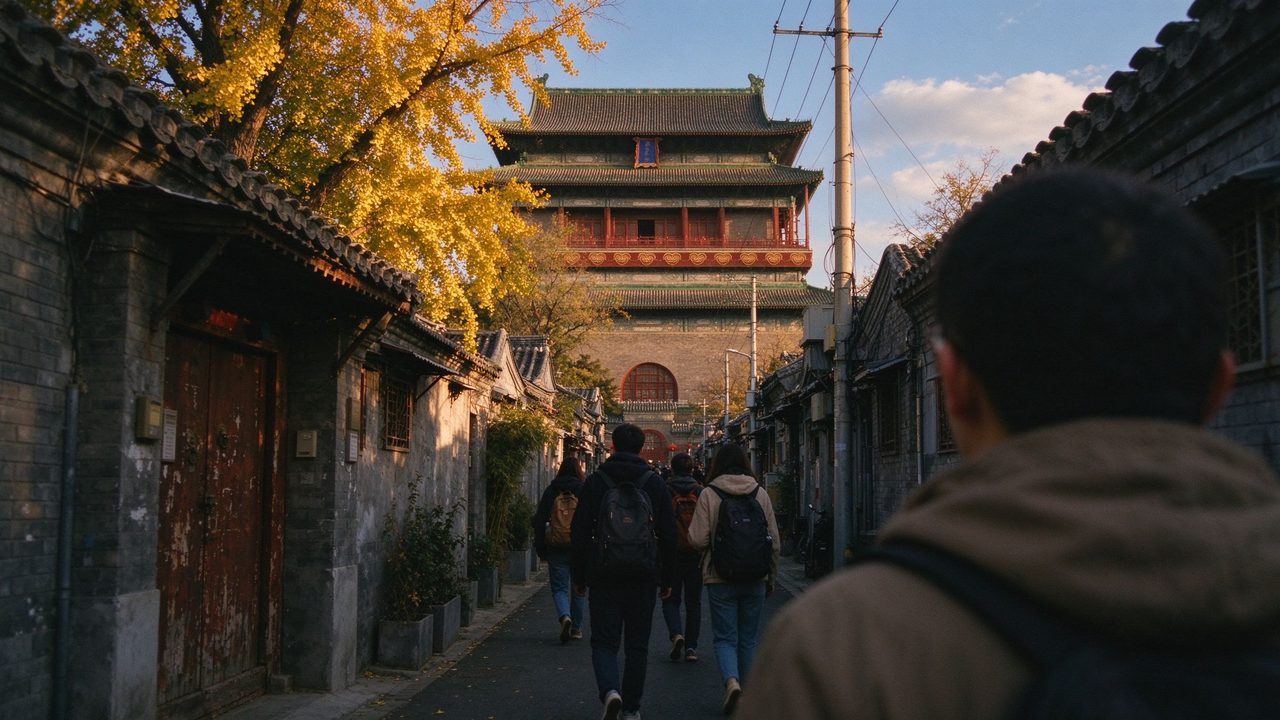
Around Beijing's Bell and Drum Towers, foreign visitors are trading ticketed landmarks for free street folk shows (erhu, flower drum, baduanjin, ribbon dragon on Bell Tower North Square) and bookable hutong micro-experiences (dumpling-making, calligraphy, diabolo, shuttlecock, mortise-and-tenon workshops). Trip.com data: cultural heritage, shows and museums made up 41% of top-50 inbound attraction sales in H1 2026; performance and live-show sales grew 307.6% year on year.
Full report
This week, the most talked-about spot in Beijing wasn't another rooftop bar or photo-op mall — it was a patch of pavement in front of the Bell Tower.
On a mild October afternoon, a tour group of foreign visitors stood in a loose circle on Bell Tower North Square, watching a folk performer play the erhu (two-stringed fiddle), then a flower-drum act, then a baduanjin routine and a dancer swinging a ribbon dragon. The show ran for over an hour. Nobody paid a cent.
"I'm here for this," Noah, a young visitor from Dominica, told a Securities Times reporter while filming the ribbon-dragon performer. "This is the meaning of travel — experiencing different cultures."
Beijing's travel scene is shifting from landmarks to living rooms
The scene captures a bigger shift in China travel. Instead of rushing between ticketed landmarks, more foreign visitors — many on their second or third trip — are spending their days inside Beijing's everyday life: street performances, hutong courtyards, dumpling tables.
The numbers back it up. On Trip.com, cultural heritage sites, shows and museums accounted for 41% of ticket sales among the top-50 inbound attractions in H1 2026, and sales of performance and live-show products grew 307.6% year on year. A survey cited by Beijing International Studies University professor Wu Liyun found that 57% of European travelers rank "experiencing something unique at the destination" as their top reason for choosing where to go.
What you can actually do around the Bell and Drum Towers
-
Catch the free street shows — folk musicians and performers (erhu, flower drum, baduanjin, ribbon dragon) regularly appear on Bell Tower North Square. Timings aren't published; wander over on a late afternoon and see what's on.
-
Book a hutong micro-experience — around the Drum Tower, operators such as "Hutong Doctor" run daily small-group sessions across several courtyard homes: making dumplings from scratch (kneading the dough yourself, a 40-60 minute session rather than a ten-minute assembly line), calligraphy, diabolo (kongzhu), shuttlecock kicking (huajian) and cricket watching. One operator even 3D-prints replica dougong brackets from the Drum Tower and runs bilingual mortise-and-tenon (sunmao) workshops.
-
Walk the classic loop — Bell Tower, Drum Tower, Yandai Xiejie (Cigarette-Pipe Street), the Shichahai lakes and the Nanluoguxiang hutong area. All of it is walkable in a single afternoon.
-
Watch the season extend — Beijing intangible-heritage shuttlecock teacher Ma Shulin, who has taught foreign visitors near the Bell and Drum Towers for years, says the busy season used to run from March to June. "Now September and October are just as busy — this year is better than last," she told the reporter.
What to watch out for
- The Bell Tower ticket page is Chinese-only. Two Italian travelers recently struggled to buy tickets on their phones — the payment step failed after they entered passport details — and had to queue at the Drum Tower ticket office across the street instead. If you plan to climb the Bell Tower, bring a passport and expect a paper-ticket detour.
- Street show times are not fixed; weather and scheduling change them day to day.
- Some hutong courtyards accept walk-ins, but most micro-experience sessions need to be booked a day ahead through a local agency or your hotel. Agencies also tailor sessions to the group: opera for repeat China travelers, dumpling-making and courtyard tours for first-timers.
Why this is the moment for Beijing's local-life scene
Visa-free stays now reach up to 30 days for many nationalities, and longer stays are exactly what makes these slower, street-level experiences possible. As the Securities Times put it, inbound tourism in China is moving from "sightseeing" to "immersive cultural experiences" — and the Bell Tower neighborhood is one of the easiest places to feel that difference without a ticket.
For more ways to spend a day inside Chinese everyday life — a $4 barbershop haircut, a neighborhood bathhouse, a bowl of hand-pulled noodles — see our guides to the Shanghai local-life scene and the China barbershop experience.
What to do next
- Wander Bell Tower North Square in the late afternoon to catch whatever free show is on. 2) Ask your hotel or a local agency to book a hutong micro-experience a day ahead. 3) Walk the classic loop: Bell Tower, Drum Tower, Yandai Xiejie, Shichahai lakes, Nanluoguxiang. 4) If climbing the Bell Tower, bring your passport and expect a paper-ticket detour to the Drum Tower office. 5) Combine with other local-life stops — see the China barbershop experience and Shanghai local-life guides on ChinaPie.
What may vary
Street show schedules change day to day with weather and performers; hutong courtyard availability varies by season and group size; some courtyards accept walk-ins, most need advance booking.