
Shanghai China Travel Trend: $4 Haircuts and $1 Noodles Are Replacing the Skyline
Overseas visitors are now skipping Shanghai's skyline for community barber shops, neighborhood bathhouses and sesame noodles. Why 'local life' tourism is China travel's new magnet — and how to do it.
Key takeaway
A growing number of overseas visitors to Shanghai are skipping the landmarks for neighborhood life — community barber shops, public bathhouses and street-side sesame noodles — according to Shangguan News. These experiences cost a few dollars (haircuts roughly the price of a specialty coffee, noodles $1-2), riding the same value wave as China's wider inbound-travel boom (about 61.3 million overseas entries in Jan-Aug 2026, +19% YoY).
Full report
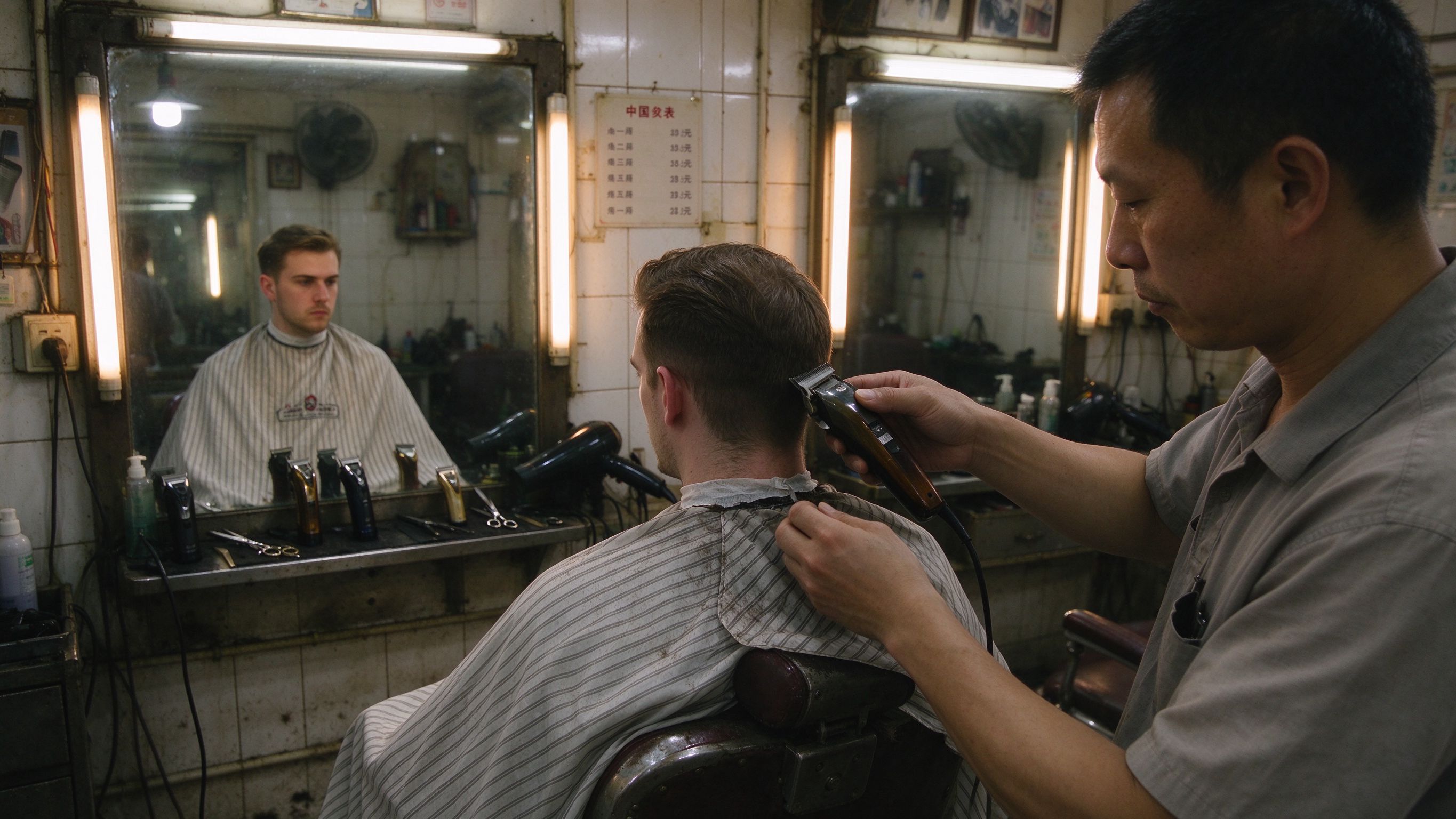
On a recent Tuesday morning, a group of overseas visitors skipped the Bund and the skyscrapers entirely. Instead they walked into a small community barber shop, sat down under the wall mirror, and asked for a haircut. Around the corner, another traveler ordered a bowl of sesame noodles and a bowl of iced soy milk for roughly two dollars.
That scene, reported by Shangguan News this week, is part of a quiet shift in how foreigners are spending time in Shanghai. The city's most photographed landmarks are still there. But a growing number of travelers are now chasing something harder to capture in a frame: neighborhood life.
Why the skyline lost its grip
For years the Shanghai travel formula was simple: Bund at sunset, Lujiazui skyline, maybe a river cruise. Those still work. But the visitors profiled in the Shangguan report went the other direction. They toured a neighborhood barber shop, tried a public bathhouse, and ate sesame noodles at a street-side shop — the kind of places locals have been going to for decades.
The appeal isn't hard to understand. A landmark is a backdrop; a neighborhood is an experience. Getting a haircut in a shop with no English menu, learning the hand signals for a bathhouse attendant, ordering noodles by pointing at the price board — these are small moments that feel like actually being somewhere, rather than watching it.
The price gap that sells itself
Value is the second half of the story. The same experiences cost a fraction of what they would back home:
- A community haircut runs a few dollars — roughly what a single specialty coffee costs in Manhattan or London. Our full breakdown is in the China barbershop experience guide.
- Sesame noodles and soy milk land around $1-2, and the queue tells you which shop is worth it.
- A neighborhood bathhouse session — soak, steam, scrub — typically costs what a single class or spa entry would charge elsewhere, a fraction of a western spa day.
That math fits a broader pattern. Inbound travel to China has been climbing through 2026: roughly 61.3 million overseas entries in the first eight months, up about 19% year on year, helped by visa-free expansion and the 240-hour transit policy. More visitors, more of them first-timers, and a growing share are looking for experiences that are cheap, real and repeatable — the exact formula of local life.
How to do a 'local life' Shanghai afternoon
You don't need a fixer or a tour guide for any of this. A workable plan looks like:
- Pick a residential neighborhood, not a tourist street. Xuhui, Jing'an backstreets and old Longhua-area lanes all work; look for streets with barber shops, bathhouses and noodle shops within a block.
- Go in the late morning. Shops are open, queues are short, and the light is good for photos.
- Walk into a community barber shop. Gestures and a photo of a haircut on your phone get you far. Prices are posted on the wall.
- Order noodles by the price board. A sesame or scallion-oil noodle shop with a line of locals is the safe bet; add a side of soy milk.
- Try a neighborhood bathhouse if you're curious. Ask your hotel or a local for a nearby one, go early, and check the posted prices before entering.
Mobile payment is the one real prerequisite. Alipay and WeChat Pay are how these places expect to be paid, and setting one up before you arrive saves the awkward moment.
What this means for your next China trip
Two takeaways. First, the best experiences are often the cheapest and the least photographed — the value story in China travel isn't about cutting corners, it's about paying a neighborhood price for a real slice of daily life. Second, you can plan this: choose one neighborhood, budget a few dollars, and let the morning unfold. It's the kind of travel that doesn't need a checklist, and that's exactly why it's catching on.
For more concrete price and booking details, see our China barbershop experience guide, or the new Suzhou canal guide if you're heading out of Shanghai.
What to do next
- Choose one residential Shanghai neighborhood with barber shops, bathhouses and noodle shops within a block. 2) Go late morning; walk into a community barber shop (prices posted on the wall). 3) Order noodles by the price board at a shop with a local queue. 4) Try a neighborhood bathhouse if curious, checking posted prices first. 5) Set up mobile payment before you arrive.
What may vary
Prices vary by neighborhood and season; treat the ranges in this article as typical, not guaranteed. Some bathhouses have gender-separated floors and specific rules — check posted notices. English menus are rare in these shops, so gestures and translation apps help.