
China Travel Is Going Rural: Why International Visitors Are Trading City Checklists for Farm Work and Homestay Tables
International media keeps reporting the same shift: visitors to China are heading out of the megacities and into villages, farms and homestay tables. A London traveler carried watermelons on a shoulder pole in Zhejiang. A Singaporean visitor spent hours at a Dali cafe. Here's what's pulling them off the main roads — and how to plan it.
Key takeaway
国际媒体一整年追踪同一个转变:来中国的外国游客正离开大城市,走进村庄、农场和民宿饭桌——从'看风景'转向'过生活'。伦敦游客凯文在宁波奉化农场干两周农活后又回中国第二次(环球时报 8-20);携程乡村度假农庄 2025 年国际游客预订同比 +50%、间夜 +75%;2026 年一季度全国乡村旅游 7.93 亿人次(+12.2%)。
Full report
"This is way harder than any weights I lifted in the gym," Kevin Loi-Heng thought, balancing two baskets of watermelons on a shoulder pole the way local farmers do.
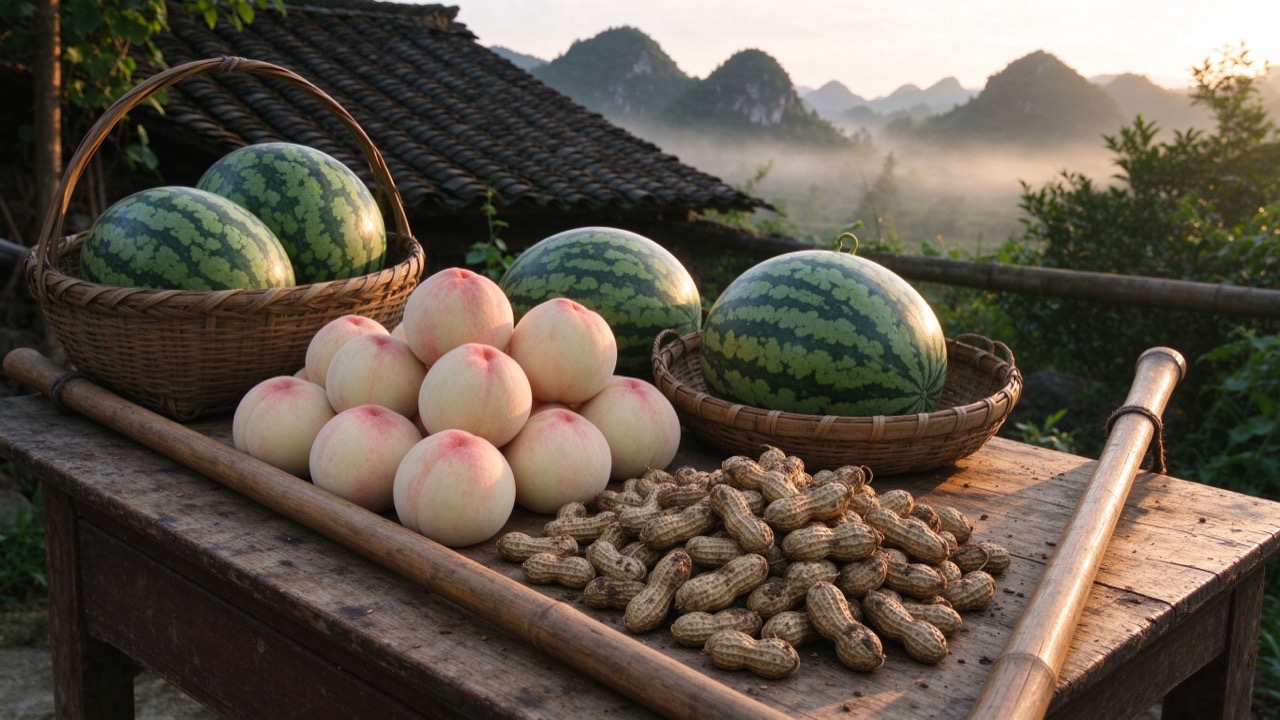
The 29-year-old from London had seen China's megacities on earlier business trips. This time, he spent two weeks working on farms in Fenghua, Ningbo — picking white peaches, digging peanuts, feeding pigs and chickens, pruning trees. He got up at 4 am. He loved it. He came back for a second trip and spent another two weeks farming in Qufu, Shandong.
Kevin is part of a trend international media has been tracking all year: China Travel is going rural.
The farm stay that started it all
Kevin's company researches sustainable agriculture and soil health, so the work wasn't totally unfamiliar. The surprise was what the land taught him. A teacher in Qufu talked to him about the "qi" of soil — an idea, he said, that is largely unfamiliar in the West, where soil is treated as a physical and chemical resource to be exploited.
"I had this picture in my head that China was very large, and that remote rural communities would have different ways of living," he told the Global Times. "I wasn't sure if they would accept a foreigner like me."
The land welcomed everything. His friends found the videos unexpected: "You're always doing side quests," one of them joked.
What draws travelers off the main roads
Zhao Mai, an English-speaking tour guide who works with international visitors, has watched the shift happen. Young travelers increasingly want to participate in everyday life and talk with local people, rather than move from one landmark to the next.
Two things pull them in, he says: affordability and authenticity. Rural China offers a combination of price, quality and variety that is hard to match elsewhere — and experiences no city tour can copy.
Sometimes the encounters are almost accidental. In March, two US content creators cycling through a village in Hunan mistook a traditional funeral gathering for a busy restaurant. Instead of being offended, a villager invited them home for a meal. They chatted about cycling, sang a song together and parted. The YouTube video passed 2 million views.
The numbers behind the shift
This is not just a social media vibe. Trip.com reported that bookings to its affiliated rural resort farms from international visitors grew more than 50 percent year on year in 2025, with room nights up over 75 percent. Singapore, the US, Australia, Germany and Malaysia led the source markets.
China also holds 19 of the "best tourism villages" selected by UN Tourism. And in the first quarter of 2026, rural tourism nationwide reached 793 million visits, up 12.2 percent year on year, according to the Ministry of Culture and Tourism data center.
Singapore's Channel NewsAsia reported the same story through travelers: Lu Liwen preferred Dali's slow rhythm to Shanghai's pace, sitting in a cafe for hours before drifting to the next stop. Indian visitor D'Souza, traveling in Xingping, Guilin, said many people abroad picture China as skyscrapers — but she wanted to see the other side, and what she remembered most was how friendly the locals were.
Homestay hosts, CNA noted, often eat at the same table as their guests — an experience no standardized city hotel can reproduce.
How to add rural immersion to your China Travel plan
You don't need to be a farmer or speak Chinese to join in. English-speaking guides like Zhao work across the main rural routes, and translation apps cover the rest.
Good entry points include: Guilin's Longji terraces during the spring plowing festival, when locals demonstrate traditional farming in the layered fields; Dali, for white Bai culture, lakeside cafes and slow days; and Xingping or Yangshuo, where homestays sit right on the karst river valley. Farm stays in Zhejiang and Shandong, like Kevin's, take bookings through rural resort platforms — expect early mornings, honest food and no script.
Travelers who go report the same trade: less comfort, more memory. As guide Zhao put it, China's countryside offers natural scenery, local traditions, community life and room for deeper participation — the things experience-driven travelers are crossing the world to find.
Browse rural homestay and farm experiences on chinapie.ai, and add one quiet day to your China Travel route.
What to do next
把乡村体验加进路线:桂林龙脊梯田春耕节(传统耕作演示)、大理(白族文化+洱海慢日子)、兴坪/阳朔(喀斯特河谷民宿)、浙江宁波奉化与山东曲阜农场(通过乡村度假平台预订,早起+诚实饭菜+无剧本);不会中文可依赖英语导游与翻译 App;出发前上 chinapie.ai 浏览乡村民宿与农场体验页
What may vary
文中引用的预订增幅(+50%/+75%)、乡村旅游人次(7.93 亿)为 2025/2026Q1 统计口径;具体农场档期、民宿房态与价格随季节变化,预订前以平台实际为准;'Very Chinese Time'为 2026 年初社媒流行语(环球时报系列报道观察视角)