
From Sightseeing to Immersion: How International Media Say China Travel Is Changing
International coverage of China's National Day holiday tells the same story: inbound travelers are trading sightseeing for immersion. One-day experience orders surged 400%, cultural attractions now take 43% of bookings, and travelers are dressing in hanfu, watching heritage shows and shopping for AI gadgets. Here's how to plan a trip built around experiences, not just landmarks.
Key takeaway
International coverage of China's 2026 National Day holiday shows inbound travel shifting from sightseeing to immersion: one-day inbound tour orders rose more than 400% year on year, cultural attractions took about 43% of inbound scenic bookings (up from ~32% in 2024), and travelers are dressing in hanfu at Yu Garden, watching heritage shows like "Charming Xiangxi" in Zhangjiajie (140,000+ overseas visitors this year) and shopping for AI gadgets at Shenzhen's Huaqiangbei.
Full report
The Headline Numbers Behind "Experience China
This week, CGTN and Xinhua published near-identical readings of China's National Day holiday: inbound tourism is no longer about checking off landmarks. National Immigration Administration data projected roughly 2.15 million border crossings per day during the holiday, and Trip.com reported double-digit growth in inbound trips - the first time during the combined Mid-Autumn and National Day period.
Two numbers stand out. Orders for one-day inbound tours surged more than fourfold year on year, and scenic spot ticket bookings jumped over 220 percent. Culture-heavy attractions took about 43 percent of inbound scenic bookings during the holiday, up from roughly 32 percent in 2024.
What Travelers Actually Do Now
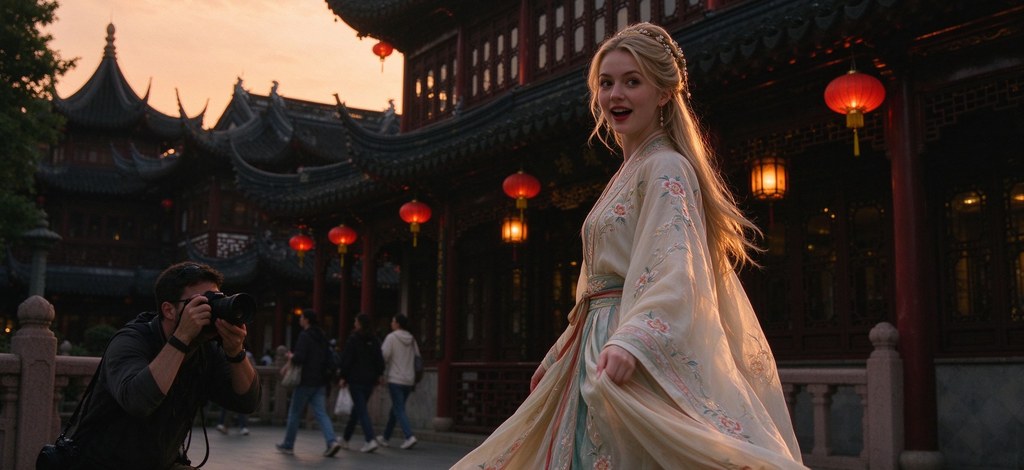
The coverage is full of concrete scenes. At Shanghai's Yu Garden, overseas visitors dress in traditional hanfu and pose for ancient-style portraits against upturned eaves and pavilions - turning a photo stop into a costume-and-culture experience. In Zhangjiajie, the "Charming Xiangxi" show blends intangible cultural heritage with real mountain-and-water scenery, multilingual subtitles and modern lighting; by the end of September it had welcomed more than 140,000 overseas visitors this year.
In Shenzhen, the Huaqiangbei electronics market has become a surprise magnet for foreign visitors drawn to AI translation glasses, smartwatches, humanoid robots, portable AI speakers and panoramic cameras.
Xinhua's county-level reporting adds another layer: travelers are venturing beyond Beijing and Shanghai. A French visitor, Lucas Martin, 28, spent part of his trip in Fenghuang ancient town in Hunan, saying "you can slow down here" and that walking along the river made him feel "more than just a passing sightseer." Australian traveler Emma Wilson tried on Miao ceremonial costumes there, explaining that a landscape photo fades quickly, but putting on traditional clothing, tasting local food and learning folk stories "create experiences that stay with you far longer."
Why This Matters for First-Time Travelers
The visa environment helps. China has expanded unilateral visa-free entry to citizens of 50 countries as of September, with stays up to 30 days, and extended the visa-free transit window to 240 hours for travelers from 57 eligible countries. The easier the entry, the more room there is to trade checklist sightseeing for hands-on experiences.
Li Xinjian, executive dean of the Capital Culture and Tourism Development Research Institute at Beijing International Studies University, told CGTN the growth is driven by "ongoing innovation in tourism offerings, experiences and consumption scenarios." China, he said, is becoming a destination where travelers can "not only see the sights, but also immerse themselves in the experience."
How to Build a Trip Around Experiences
- Pick one cultural activity per city. A hanfu photo session at Yu Garden, a pottery class in Jingdezhen, a Miao costume fitting in Fenghuang - one immersive anchor beats three rushed landmarks.
- Check performance schedules early. Heritage shows like "Charming Xiangxi" book out fast during holidays; multilingual subtitle options make them accessible.
- Leave room for the unplanned. The travel pattern visible in the data is a mix of one fixed experience plus open time for wandering markets, streets and nightlife.
- Use your visa-free window wisely. With 30 days available under unilateral exemptions, it is realistic to combine two or three cities and a county-level destination.
The Takeaway
The shift from sightseeing to immersion is not a marketing line - it is visible in booking data, ticket sales and the way travelers describe their days. For anyone planning a first trip to China, the practical version of this trend is simple: schedule fewer sights, book one or two real experiences, and leave the rest open.
More China travel guides: the Jingdezhen pottery experience · the night market guide · Golden Week 2026 inbound travel data
What to do next
Build the trip around one immersive anchor per city - a hanfu photo session at Yu Garden, a pottery class in Jingdezhen, a Miao costume fitting in Fenghuang - check heritage show schedules early, and leave unplanned time for markets, streets and nightlife.
What may vary
Specific show schedules, workshop availability and prices vary; figures come from CGTN and Xinhua coverage published October 2026 and from the National Immigration Administration. Traveler quotes are attributed to the named individuals in the original reporting.