
China Travel: 72% of Foreign Arrivals Now Enter Visa-Free, and Winter Is the Cheap Window
Visa-free arrivals are now 72.2% of foreign entries into China. What that Q3 border data means for a winter trip: 150-350 yuan days, a 40-yuan Forbidden City, and 553-yuan trains.
Key takeaway
China's National Immigration Administration reported 20.13 million foreign entries in Q3 2025, of which 7.25 million (72.2%) arrived visa-free, up 48.3% year on year. A winter trip now costs roughly 150-350 yuan a day backpacker, 400-800 mid-range, with the Forbidden City at 40 yuan off-season.
Read on
Visa-free entry used to be the exception on a China trip. It is now how most people get in.
The National Immigration Administration's third-quarter release, published on 16 October 2025, put foreign entries at 20.13 million for July to September, up 22.3% year on year. Of those, 7.25 million arrived visa-free: 72.2% of all foreign arrivals, and 48.3% more than the same quarter a year earlier. For the first nine months of 2025, border crossings of every kind reached 510 million, up 14.3%.
That is a policy story and a budget story at once. Once the paperwork stops being the hard part, the cost of the trip comes down to three things: where you sleep, how often you take a taxi, and how many cities you add.
What the 72% figure changes at the border
The 240-hour transit rule and the 30-day visa-free arrangements for a long list of European, British, Australian and Canadian passports are the mechanism behind that number. US passport holders still need a visa for ordinary tourism, but can use the 240-hour transit exemption at many ports if they are travelling on to a third country.
The practical effect is a shorter arrival day and a later decision. Fewer people queue for a visa interview months ahead; more book a month out. The catch is that exemptions are the part most likely to change, and several of the 30-day arrangements are written to run only to the end of 2026. Check your own passport two weeks before booking, not two months.
A winter day, priced line by line
November to March is the quiet window. The Forbidden City drops from 60 yuan in peak season to 40. Hotels are the second discount: hostel dorm beds in Beijing and Shanghai run 60 to 150 yuan a night, and a private room in a budget guesthouse 150 to 250.
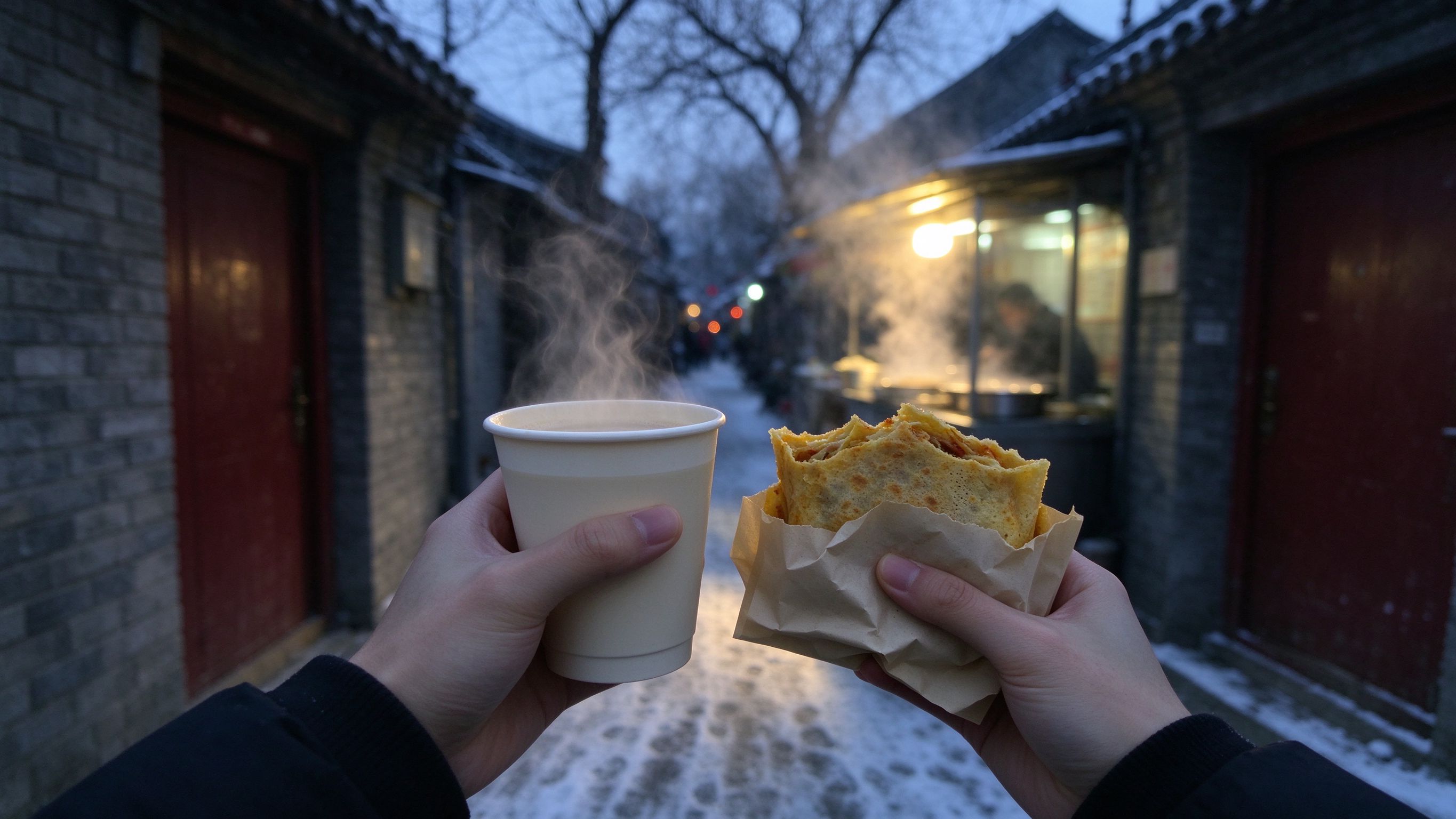
A backpacker day, bed included, lands around 150 to 350 yuan. That covers a dorm bed, a jianbing crepe and soy milk for 5 to 15 yuan, a bowl of noodles for 15 to 40, metro rides at 2 to 3 yuan a hop, and one paid sight or none at all. Mid-range, sharing a double room and taking the odd taxi, runs 400 to 800. Comfort, with a four-star room and restaurant dinners, starts near 1,000.
Three fixed prices are worth memorising. Beijing taxi flagfall is 13 to 14 yuan. The Terracotta Army is 120. The National Museum and Shanghai Museum East are free with a passport reservation.
Where the money actually goes
Accommodation decides your tier, not food. Two travellers can eat lunch in the same dumpling shop for 20 yuan each and still sleep in rooms that differ by 300 to 500 yuan a night.
The second leak is taxis. A metro ride across Beijing costs a few yuan, and the same trip by cab costs several times that. Use DiDi for airport runs and the metro for everything else.
The third is city count. A second-class seat from Beijing South to Shanghai Hongqiao is 553 to 662 yuan and takes about four and a half hours. Beijing West to Xi'an North runs 494 to 587. Two long legs can cost more than a week of meals, which is why ten days in three cities usually beats ten days in six.
Booking it without losing a day
Train tickets go on sale about 30 days out, and the popular morning departures on the Beijing-Shanghai line go first in the December holiday window. Book on 12306 or Trip.com and carry the passport you booked with: it is the ticket, checked at the gate.
Set up Alipay or WeChat Pay before you fly, linked to your own card. Cash is legal tender, but small vendors often have no change. Do the same with an eSIM, and install your VPN before arrival, because the download will not work once you are inside.
What still trips people up
A handful of small guesthouses still do not register foreign guests, despite 2024 rules telling hotels not to refuse them. Confirm before booking, not at 11pm with a suitcase.
Northern winters are not a photo filter. Harbin and Mohe sit between -20°C and -40°C in January, and the wind on the Great Wall is worse than the number. Kunming and Xiamen stay mild, which is why winter routes usually run south.
The 240-hour transit exemption also has a direction. It is for leaving to a third country, not for returning the way you came, and the clock starts on entry.
Start with what you want to eat and where you want to walk, then price the beds around it. The border is no longer the bottleneck. The bed and the train are.
What to do next
Check your passport's current entry rule on the National Immigration Administration site or with your nearest Chinese embassy two weeks before booking. Price the trip in three tiers: dorm bed plus street food, mid-range double room, or four-star with restaurant dinners. Book high-speed rail about 30 days out on 12306 or Trip.com and carry the passport used for the booking. Link your own card to Alipay or WeChat Pay, and install your VPN and eSIM before departure.
What may vary
Visa-free lists and the 30-day window are policy settings with expiry dates and can change at short notice. Hotel and food prices are market rates, and Beijing or Shanghai run 20-40% above second-tier cities. Rail fares float by train and date, so the figures quoted are sample second-class fares rather than fixed prices. Winter weather ranges from -20C to -40C in the northeast to mild in Kunming and Xiamen.