
Shenzhen 240-Hour Visa-Free Transit Guide 2026: 10 Days, 57 Countries & APEC Week — China Travel | ChinaPie
With APEC 2026's Economic Leaders' Week opening in Shenzhen on November 14, the 240-hour visa-free transit is how travelers from 57 countries get 10 days in Guangdong with no visa. Real ports, real steps, real costs.
Key takeaway
深圳 240 小时过境免签实操:适用 57 国(2026-08 新增吉尔吉斯斯坦、越南),从 24 省 65 个开放口岸入境(2025-11-05 起含港珠澳大桥/横琴/琶洲客运港/中山港/广深港高铁西九龙站),在限定区域停留不超过 10 天(240 小时)。硬条件:护照有效期≥3 个月 + 240 小时内前往第三国/地区的联程客票(回母国不适用)+ 符合第三国入境条件。深圳适用口岸=宝安国际机场与蛇口邮轮母港(客运);罗湖/皇岗/深圳湾等陆路口岸不适用。入境后 24 小时内须在旅店或公安派出所办理住宿登记。可在 24 省(区、市)规定区域内跨省旅行(广东省全域开放)。宝安机场为国际中转旅客推出免费城市游(首发深圳湾人才公园)。
Full guide
Shenzhen's 240-hour visa-free transit is the most underused visa hack in China Travel — and it is about to matter more than ever. APEC 2026's Economic Leaders' Week opens in Shenzhen on November 14, which means the city is about to be on every business traveler's and every digital nomad's radar. The rule itself is simple: citizens of 57 countries can enter through 65 ports across 24 Chinese provinces and stay up to 240 hours — ten full days — without a visa, as long as they hold an onward ticket to a third country or region within that window.
Most guides repeat the headline and stop. This one walks you through the parts that actually trip people up: which Shenzhen port to fly into, why a return-home ticket will get you rejected, the hotel registration nobody mentions, and a 10-day itinerary built around APEC week.
Fast facts
| Item | Detail |
|---|---|
| Who qualifies | Citizens of 57 countries — including the US, UK, Russia, all EU states, Australia, Japan, South Korea, Canada and Brazil |
| Stay | Up to 240 hours (10 days), no visa |
| Shenzhen ports | Bao'an International Airport (air) and Shekou Cruise Homeport (passenger) |
| The non-negotiable | Onward ticket to a third country/region departing within 240 hours; passport valid 3+ months |
| Where you can move | The 24 designated provinces/regions — Guangdong is fully inside the zone |
| Registration | Hotel or police station registration within 24 hours of arrival |
| Budget | About ¥500–700/day per person all-in (details below) |
Who can use it — and the three hard conditions
The 240-hour transit exemption covers 57 countries, a list that grew in August 2026 when Kyrgyzstan and Vietnam were added. If your passport is on it, you do not need a visa application at all — but the rules are not optional, and border officers do check all three:
- Passport valid for at least 3 months beyond your intended stay.
- An onward ticket to a third country or region, with confirmed dates and itinerary, leaving within 240 hours. This is the one that filters people. The destination must be a third country — Hong Kong, Macau and Taiwan count as "third regions" for this purpose, but your home country does not. A round-trip ticket that returns home does not qualify; you need a confirmed onward leg.
- You meet the entry requirements of that next destination (visa, if it needs one). Border officers will ask.
You will fill in a temporary entry card at the checkpoint and answer questions about your plan. Have the onward ticket printed or saved offline — phone screens are accepted in practice, but printed copies make the conversation shorter.
Which ports work — and the one that doesn't
The 240-hour rule runs through 65 ports in 24 provinces. In Shenzhen itself, two ports accept it:
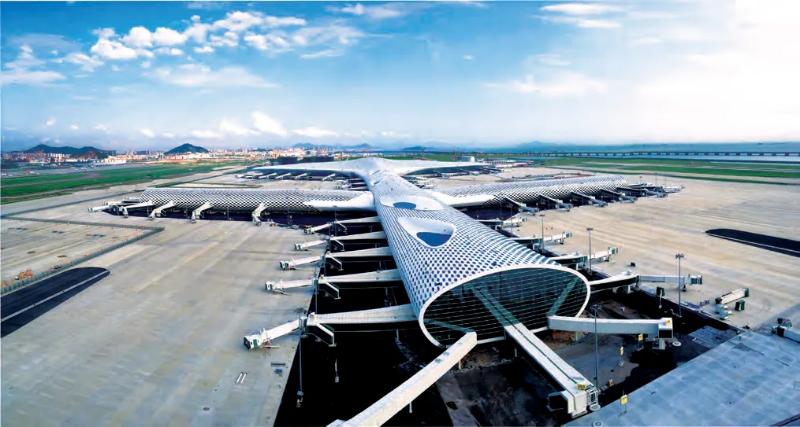
- Shenzhen Bao'an International Airport (SZX) — the main entry point, with direct flights from most of the 57 countries' hubs.
- Shekou Cruise Homeport (passenger) — if you arrive by cruise ship.
Elsewhere in the Greater Bay Area, the list expanded in November 2025 from 60 to 65 ports, adding Guangzhou's Panyu cruise homeport, the Hong Kong–Zhuhai–Macau Bridge, Hengqin, Zhongshan port and the high-speed rail station at West Kowloon in Hong Kong. That last one is worth knowing: you can fly into Hong Kong, take the high-speed rail from West Kowloon to Shenzhen, and enter under the 240-hour rule at the West Kowloon checkpoint — the station counts as one of the 65 ports.
The mistake people make: Shenzhen's land border crossings — Luohu, Huanggang, Shenzhen Bay — do not accept the 240-hour transit exemption. Do not plan to walk or drive across the border and present yourself as a transit passenger; you will be redirected to the visa office.
A useful extra for air travelers: Bao'an Airport has been running a free city tour for international transit passengers, with the first groups visiting Shenzhen Bay Talent Park (深圳湾人才公园) — a waterside skyline park that costs nothing and photographs like a postcard. Launched in August 2026, the tour is worth asking about at the airport's transit service desk; details and schedules vary, so confirm on arrival.
What to set up before you land
- Check the current country list. It changed in August 2026 — verify yours against the National Immigration Administration's latest notice before booking anything. Our China visa-free guide tracks the list.
- Book the onward leg first. The 240-hour clock starts at midnight after your entry day, so a ticket on day 10 works. Keep the itinerary with confirmed dates — the officer wants to see dates and a destination.
- Set up payments before arrival. Alipay and WeChat Pay both accept international Visa/Mastercard; link and test them before you fly. Shenzhen is about as cashless as cities get.
- Install Amap (Gaode Maps) — the English interface works in 2026 and it is far more accurate in China than Google Maps.
- Have your hotel address ready. You need it for the registration below.
Arriving: the 240-hour entry, step by step
- Land at Bao'an T3. Follow international arrivals; look for the transit (过境) sign rather than the regular visa lane — airport staff route 240-hour passengers to the transit counters.
- At the counter: passport, the onward ticket (printed or offline), your temporary entry card, and straight answers about the plan. The officer stamps your passport with the transit entry and the 240-hour period.
- The clock runs from midnight after entry — a landing at 10am on day 1 gives you until midnight of day 10, not 240 hours from landing. Plan your departure accordingly.
- Register within 24 hours. Hotels register you automatically at check-in (this is why your passport goes to reception). If you are staying somewhere that cannot register you — some serviced apartments, friends' places — go to the local police station (派出所) within 24 hours with your passport. It takes minutes and it is mandatory; skipping it is the most common avoidable fine.
- Leave on your onward ticket. The exit is ordinary: passport + boarding pass.
One more thing to know: 24-hour direct transit (no overnight stay) at ten airports — including Bao'an — has its own faster channel, separate from the 240-hour rule. If you are only changing planes, ask for the 24-hour transit desk.
Day-by-day: ten days built around APEC week
APEC 2026's Economic Leaders' Week runs November 14–16 in Shenzhen. Arrive November 5 and you cover the opening week's build-up; arrive earlier and you have the run of a city that empties out at festival scale during the event itself. Either way, ten days is a genuinely good amount of Shenzhen — this city is a 40-year-old tech metropolis and a food city disguised as an office park. Here is a workable shape:
- Days 1–2 — Waterfront and the creative district. Jetlag day: Shenzhen Bay Talent Park and the Shenzhen Bay boardwalk (free), then OCT-LOFT, the 1980s factory complex turned design quarter — free entry, galleries, and the city's best independent coffee. Our OCT-LOFT guide covers it properly.
- Days 3–4 — The tech loop. Huaqiangbei's electronics streets, then the food that lands from the sky: Shenzhen's drone delivery network runs 70+ routes with roughly 8-minute average delivery — tourists can order one themselves, and our drone delivery guide has the how.
- Days 5–6 — Shekou and the sea. Sea World, the waterfront promenade, and the seafood streets around the Shekou cruise area — the same homeport you may have sailed into.
- Days 7–8 — Food days. Cantonese morning tea (广式早茶), then night markets. Shenzhen's night-food scene is enormous; budget an evening for the street-food areas near the older districts.
- Days 9–10 — One night out of town (optional). Guangzhou is 30–40 minutes by high-speed rail from Shenzhen North — same 240-hour zone, no extra paperwork. A day trip to Guangzhou's old town or a night in the Pearl River delta's food capital fits inside the window.
All of Guangdong is inside the designated area, so intra-province movement (Shenzhen → Guangzhou → Zhuhai) is fine. If you cross to another of the 24 provinces, double-check the designated zone list first — the 240-hour rule allows movement across the provinces' approved areas, not the entire country.
Real costs: ten days in Shenzhen
| Item | Cost |
|---|---|
| OCT-LOFT & city parks | Free |
| Shenzhen Bay Talent Park | Free |
| Metro | ¥2–7 per ride |
| Drone-delivered meal | Comparable to street food pricing (the delivery itself is the experience) |
| Morning tea (per person) | ¥40–80 |
| Shekou seafood dinner | ¥80–150 |
| High-speed rail to Guangzhou | ¥75–110 one way |
| Hostel / budget hotel | ¥150–250/night |
| Mid-range hotel | ¥300–500/night |
| 10-day total (incl. hotel, excl. flights) | ~¥5,000–7,500 |
Prices are 2026 street-level estimates from public listings and recent traveler reports — the point is the ratio: Shenzhen delivers world-class tech tourism and a food scene that competes with any city in Asia at roughly a fifth to a tenth of what equivalent experiences cost in Tokyo or Singapore. That is the ChinaPie story, and Shenzhen is where it is loudest this month.
Getting around
- Metro: the network covers the city; fares ¥2–7. You can scan Alipay/WeChat or — on supported lines — tap an international bank card at the gates. Our metro payment guide walks through which lines accept cards.
- High-speed rail: Shenzhen North → Guangzhou South in ~30–40 minutes; book on Trip.com or the official 12306 app with your passport.
- Taxis & ride-hail: Didi works with an international number and card.
The mistakes to avoid
- Trying the land borders. Luohu, Huanggang and Shenzhen Bay do not accept the 240-hour transit exemption — fly into Bao'an or sail into Shekou.
- Booking the onward ticket home. The onward leg must be to a third country or region. Hong Kong counts; your home country does not.
- Skipping the 24-hour registration. Hotels handle it automatically; private stays require a police-station visit within 24 hours. The fine is avoidable and annoying.
- Passport under 3 months' validity. Non-negotiable at the counter.
- Overstaying or leaving the zone. Ten days is the ceiling, and the approved area is the 24 provinces' designated regions — not all of China.
- Expecting visa services from us. ChinaPie does not arrange visas, permits or travel documents — we map experiences. For anything document-related, go through official channels.
Common questions you will actually ask
Do I need a visa to transit through Shenzhen? If your passport is one of the 57 countries covered by the 240-hour transit exemption, no — with an onward ticket to a third country/region within 10 days and a passport valid 3+ months.
240 hours is how many days? Ten. The clock starts at midnight after your entry day, so arriving midday gives you until midnight of the tenth day.
Which Shenzhen ports accept 240-hour transit? Bao'an International Airport and Shekou Cruise Homeport. The land border crossings (Luohu, Huanggang, Shenzhen Bay) do not.
Do I need an onward ticket? Yes — confirmed dates and itinerary, departing within the 240-hour window, to a third country or region. A return-home ticket does not qualify.
Do I have to register with the police? Hotels register you automatically. If your accommodation cannot, register in person at the local police station within 24 hours of arrival.
Can I visit Guangzhou? Yes — Guangdong is fully inside the 240-hour zone. Shenzhen–Guangzhou is 30–40 minutes by high-speed rail.
Is there a free airport city tour? Bao'an Airport has run free city tours for international transit passengers (first group visited Shenzhen Bay Talent Park, August 2026). Ask at the transit service desk on arrival — schedules vary.
Why this matters in November
APEC's Economic Leaders' Week opens in Shenzhen on November 14, 2026, and the 240-hour transit rule is the reason a 57-country business crowd can treat the city as a long-weekend destination without touching a visa office. Ten days, zero visa paperwork, one of Asia's best food cities, and the most futuristic urban skyline on the continent — that is the whole pitch.
ChinaPie maps Shenzhen's experiences with real prices and directions: OCT-LOFT galleries, drone-delivered lunch, morning tea, night markets and the waterfront at dusk. For the APEC-week picture, see our Shenzhen APEC hub (going live as the summit nears), and for the city's bigger business-travel context, the Canton Fair hub.
How to do it
出发前:上国家移民管理局官网确认本国是否在 57 国名单、护照有效期≥3 个月;先订好 240 小时内前往第三国/地区的联程客票(含确定日期与行程),打印或离线保存
支付与工具:落地前把国际 Visa/Mastercard 绑定支付宝/微信并测试;下载高德地图(英文界面)
入境:飞宝安国际机场 T3,走国际到达的过境/transit 通道(非普通签证通道);边检柜台交护照+联程客票、填临时入境卡、如实回答行程,获盖 240 小时过境章
住宿登记:入境后 24 小时内完成——酒店前台自动登记;民宿/私人住宿需带护照到辖区派出所登记
行程:10 天(自入境次日零时起算)内可在广东省全域移动(深圳-广州高铁 30-40 分钟),跨省需核对 24 省规定区域
离境:按联程客票乘机/乘船离开;出境走正常通道(护照+登机牌/船票)
Watch for
从陆路口岸入境:罗湖/皇岗/深圳湾不适用 240 小时过境免签,会被引导至签证办理处
联程客票订回母国:必须是第三国/地区(香港算,母国不算),往返母国机票会被拒
忘 24 小时住宿登记:酒店自动办理;私人住宿须 24 小时内到派出所登记,漏办会被罚款
护照有效期不足 3 个月:边检柜台直接拒绝
超 10 天或越区域:240 小时是上限,活动范围限 24 省规定区域,不是全国
指望 ChinaPie 代办证件:我们不代办签证/证件,证件事宜一律走官方渠道