
Guilin Inbound Travel Boom 2026: 1.25M Overnight Visitors in 7 Months | China Travel
Guilin's inbound boom in numbers: 1.25M overnight visitors (+63.5%), foreign arrivals up 187% at the port in Q2, 240-hour visa-free transit now at 57 countries — and why the karst city wins on value.
Key takeaway
Guilin hosted 1.25M overnight international visitors in Jan–Jul 2026 (+63.5% YoY), with international tourism revenue of USD 548M (+78.4%). The 240-hour visa-free transit program now covers 57 countries at 65 ports, and second-tier destinations like Guilin are drawing a growing share of first-time and repeat visitors.
Read on
Why Guilin is the 2026 inbound story
A clip shot at Guilin West Station — platforms crowded with first-time visitors from Europe, the US and Southeast Asia — passed 60,000 likes on Chinese social media within days. The caption writers landed on the same phrase: "the station turned into the UN."
The viral moment lines up with official numbers. Guilin's Culture and Tourism Bureau reported 1.25 million overnight international visitors in the first seven months of 2026, up 63.5% year on year, with international tourism revenue of USD 548 million, up 78.4%. The city was also named one of the most internationally influential inbound destinations for 2025–2026.
The border data agrees
Border figures go further. In Q2 2026, passenger traffic through Guilin's port rose 148.6% year on year — and foreign travelers jumped 187%. In the first half, foreign arrivals made up 65.79% of the port's total. By summer the mix had visibly changed: tour groups from France, Germany and Italy began arriving in growing numbers, a shift from the earlier Southeast Asia / Japan / Korea-heavy pattern.
What changed: the 240-hour visa
A big share of the surge traces to policy. In August 2026, China's National Immigration Administration added Kyrgyzstan and Vietnam to the 240-hour visa-free transit program. The program now covers 57 countries through 65 open ports: no visa, no fee, up to 10 days in the country — as long as you hold a passport and a confirmed onward ticket.
For most travelers that flips the calculation. A layover that used to mean a hotel room and a terminal becomes a real trip. Consular guidance notes visa-free entry can be used repeatedly, with no current cap on the number of entries or total stay days — which is exactly the setup that turns a first visit into a second one.
Why the value argument favors Guilin
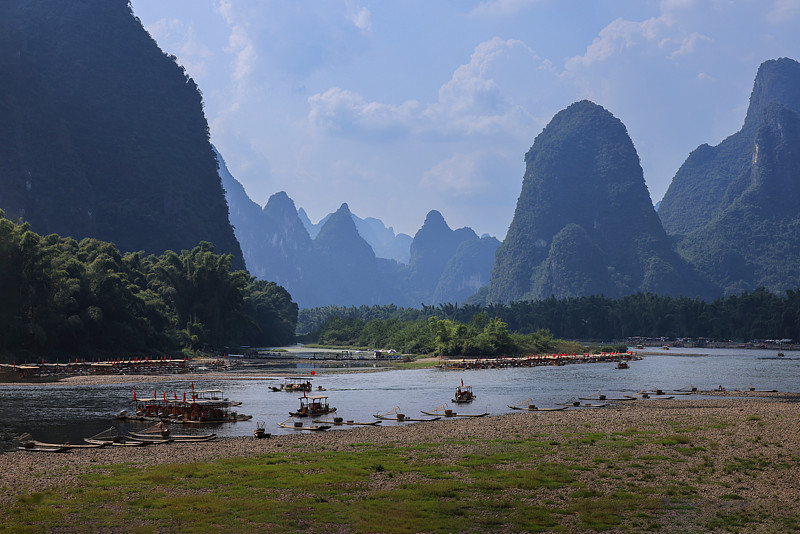
Here is where the economics kick in. The experiences that made Guilin famous cost a fraction of what similar experiences cost in the biggest hubs: a bamboo raft drifting past karst peaks, a guesthouse room with a mountain view, a bowl of the city's famous rice noodles. For young travelers, the pitch writes itself — bigger scenery, smaller bill.
The must-dos cluster in a small radius:
- Yangshuo: Li River bamboo rafting near Xingping Ancient Town (the scene on the ¥20 note), cycling the Yulong River, evening West Street.
- Guilin city: Elephant Trunk Hill, the Two Rivers and Four Lakes night cruise, a rice-noodle breakfast.
- Longji: the rice terraces north of the city — a day trip is enough to see the hillside steps that fill with light at dusk.
How to fit it into 10 days
Entry is simple. Fly into Guilin Liangjiang International Airport or take the high-speed rail from Shenzhen or Guangzhou — under three hours from the latter. Keep your onward ticket ready for the 240-hour visa-free window, then structure the trip: three days in the city, three or four in Yangshuo, a day for the terraces, and the rest as slack.
The bigger picture
Guilin is not the only city riding this wave; it is just the most visible. The 2026 pattern across China's inbound data is that travelers are moving beyond the hubs — into landscape cities, food streets and smaller towns where value is highest. With APEC week opening in Shenzhen on November 14, the next window is already forming: business travelers with extra days, visa-free entry, and a city built for first impressions. The cities that combine beauty, food and price keep winning — and Guilin is the proof so far.
What to do next
Fly or rail into Guilin, spend 3 days in the city (Elephant Trunk Hill, Two Rivers and Four Lakes), then 3–4 days in Yangshuo for Li River bamboo rafting and Yulong River cycling; add Longji Rice Terraces if the 10-day window allows. Confirm your nationality is covered by the 240-hour visa-free transit before booking.
What may vary
Eligibility depends on nationality, entry port and onward-ticket rules; policies can change, so confirm with the National Immigration Administration before you fly. Summer and Golden Week peak fast.