
China Travel Experience: Foreign Tourists Are Now Harvesting Rice in Longji Terraces
Foreign visitors are joining farmers to harvest rice in Guangxi's Longji Terraces this autumn. ¥80 entry, homestay-run field experiences, buses from Guilin — here's how to do the harvest-season trip.
Key takeaway
广西龙脊梯田正值秋收季,外国游客专程到龙脊村下田体验水果采收、稻谷收割与手工脱粒,10 月 12 日被广西新闻网/新华社报道'火出圈'。梯田门票 80 元/人(3 日有效、覆盖三大片区),桂林有约 50 元/人的直达大巴;9 月下旬至 10 月中旬是金色稻浪最佳窗口,10 月底陆续开镰收割,多数梯田民宿可安排下田体验。
Read on
The news
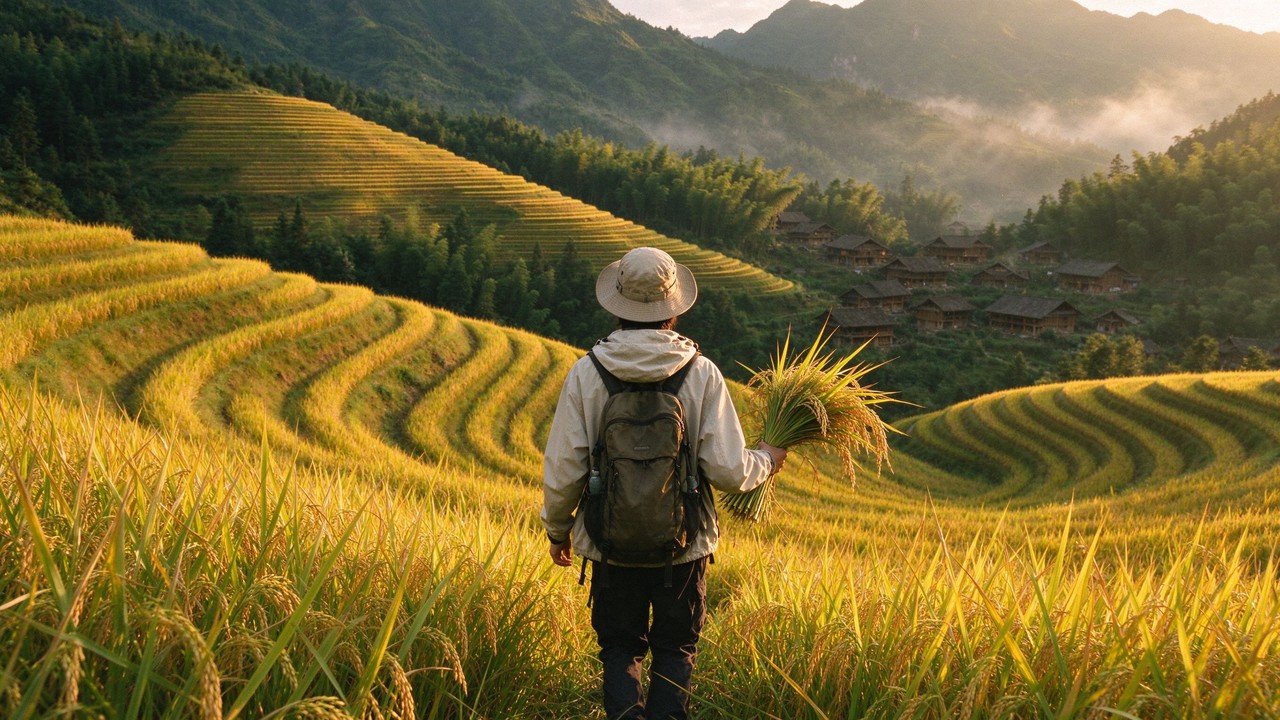
Guangxi's Longji Rice Terraces have been on travel lists for years, usually for the photos. This month the story changed: foreign visitors are going there to work the harvest. On October 12, Guangxi News reported that overseas tourists are now joining villagers in the terraces to pick fruit, cut rice and thresh it by hand — turning a scenic viewpoint into a working farm experience that went viral on Chinese social media. Xinhua ran a similar picture story on October 8 of a visitor harvesting rice in Longji Village.
The terraces themselves are the hook. Cut into the mountains of Longsheng County, about two hours from Guilin, they have been farmed for more than 650 years by Zhuang and Yao communities. In mid-October the paddies turn full gold and the harvest begins — exactly when the hands-on experiences become available.
What travelers can actually do
The main draw is joining the harvest. Local farmers — usually arranged through homestay owners — run rice-cutting and threshing sessions in the fields, and some families in Longji Village now host the same experience that made the news this week. Expect mud, sore legs and one of the more memorable afternoons of a China trip. It is not staged for tourists; it is the actual work of the season, done alongside the people who live there. (One Trip.com reviewer described standing in the paddy and feeling "like part of this place" — a fair summary.)
Beyond the fields, the terraces split into two core areas. Ping'an Village has the classic "Seven Stars with the Moon" viewpoint and works as an easier day visit. Dazhai (Jinkeng Grand Terraces) is bigger, with a cable car up to Jinfo Peak for sunset. The two are about 40 minutes apart by mountain road, so pick one as a base.
How to plan the trip
- When: late September to mid-October is the golden window; the harvest starts winding up in late October. May to June (irrigation season) is the mirror-water period if you miss autumn.
- Getting there: a direct bus from Guilin (departing near Guilin Railway Station) runs to the scenic area for about ¥50 per person; a private car from Guilin Liangjiang Airport is about 2.5 hours and ¥300–400 per car. The road from the gate to the villages is a narrow mountain road — most first-timers skip self-driving.
- Tickets: ¥80 per person, valid for three days and covering all three terrace areas (Ping'an, Dazhai and the ancient Zhuang village). The Jinkeng cable car is around ¥70 one-way; prices are set by the operator, so check on arrival.
- Staying: guesthouses on the terraces are the move — many double as homestays that arrange the harvest experience and bamboo-rice cooking. Sunrise from Xishan Shaole in Jinkeng or the morning light over Ping'an are the classic photo hours.
Why it matters
This is the pattern that keeps showing up in 2026's China travel boom: travelers want to do things, not just see them. A ¥80 ticket to walk through golden terraces is fine; a ¥80 ticket that puts you in the field, harvesting rice with the family who grew it, is the version people actually talk about. For young travelers priced out of expensive "experience" tours elsewhere, it is also the point China makes best: the real thing, at a fraction of the cost. Browse chinapie.ai for Guangxi and farm-stay experience pages before you book.
What to do next
9 月下旬-10 月中旬前往(10 月底陆续开镰);从桂林乘直达大巴约 50 元/人,或两江机场包车;门票 80 元/人 3 日有效;入住梯田民宿并请民宿老板安排割稻/脱粒体验与竹筒饭制作;清晨在金坑西山韶乐或平安寨看日出
What may vary
收割体验是否可参与、缆车票价与民宿排期以当地农户/运营方现场为准;收割进度视当年农时(10 月底起陆续开镰);5-6 月灌水期是另一经典景观窗口