Urumqi

Urumqi · 乌鲁木齐

Urumqi Travel Guide

Urumqi is China's inland gate to Central Asia: a living Uyghur bazaar city at the foot of the Tianshan, anchored by a provincial museum holding four thousand years of Silk Road oasis history—and a 1.5-hour drive from the glacial alpine lake of Heavenly Lake (Tianchi).

First-time China travelers extending the Xi'an–Lanzhou route west into XinjiangSilk Road and archaeology travelers drawn to the museum's ancient mummies and oasis citiesFood travelers chasing lamb skewers, naan, dapanji and hand-pulled noodlesMountain travelers using Urumqi as a base for Tianshan lakes and pasture day trips
Food cityScenic
Plan this city

City at a Glance

Suggested Stay
1–3 days
Travel Style
  • Food city
  • Scenic
Highlights
  • Xinjiang International Grand Bazaar
  • Heavenly Lake (Tianchi)
  • Xinjiang Museum
  • Hongshan Park
Getting Around
Metro (1 line) covers city center. Didi cheap. Heavenly Lake via tour bus (1.5h). Airport 20 min from center. High-speed rail to Turpan (1h), Kashgar (12h).
1

Why make a special trip

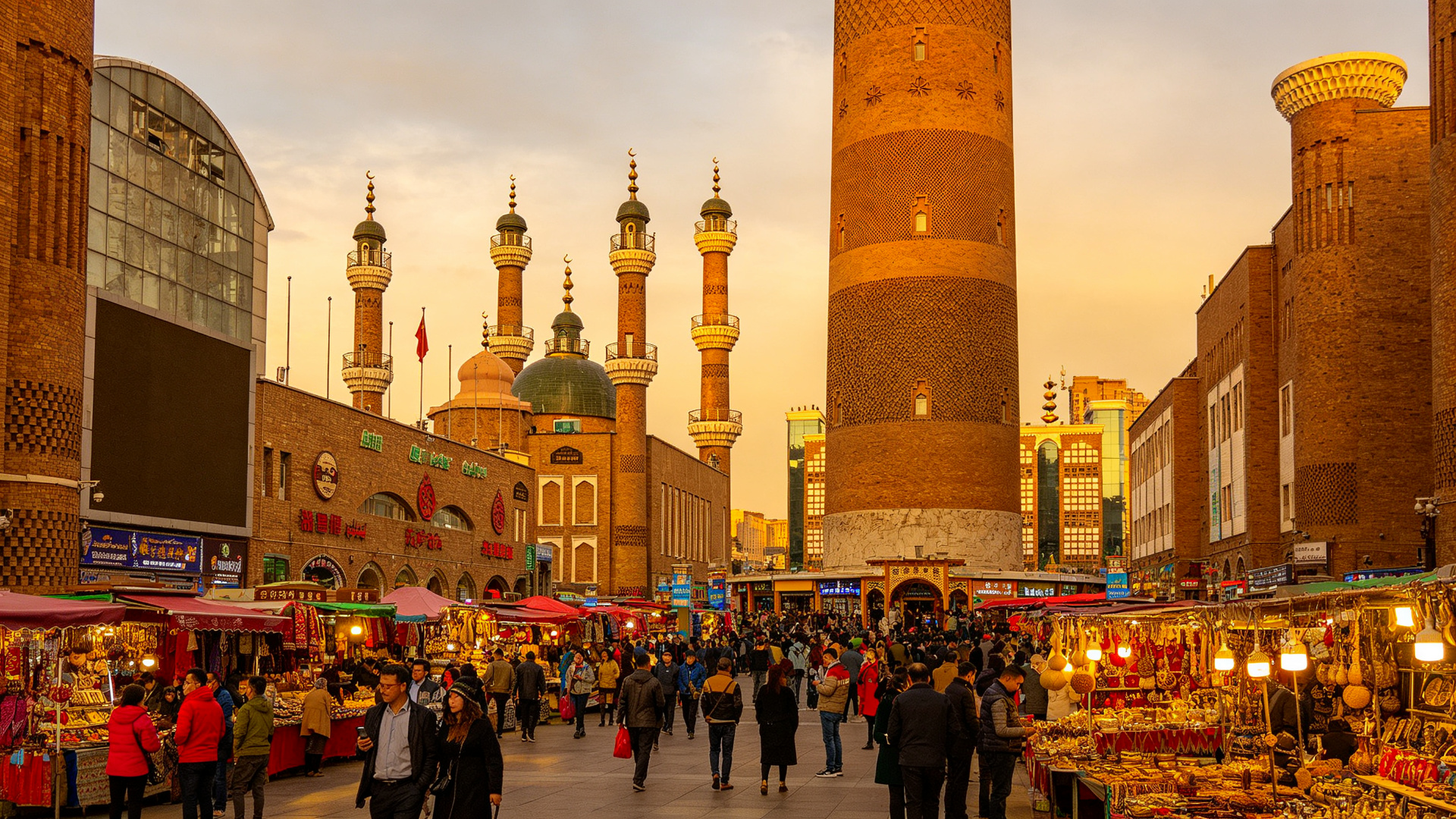
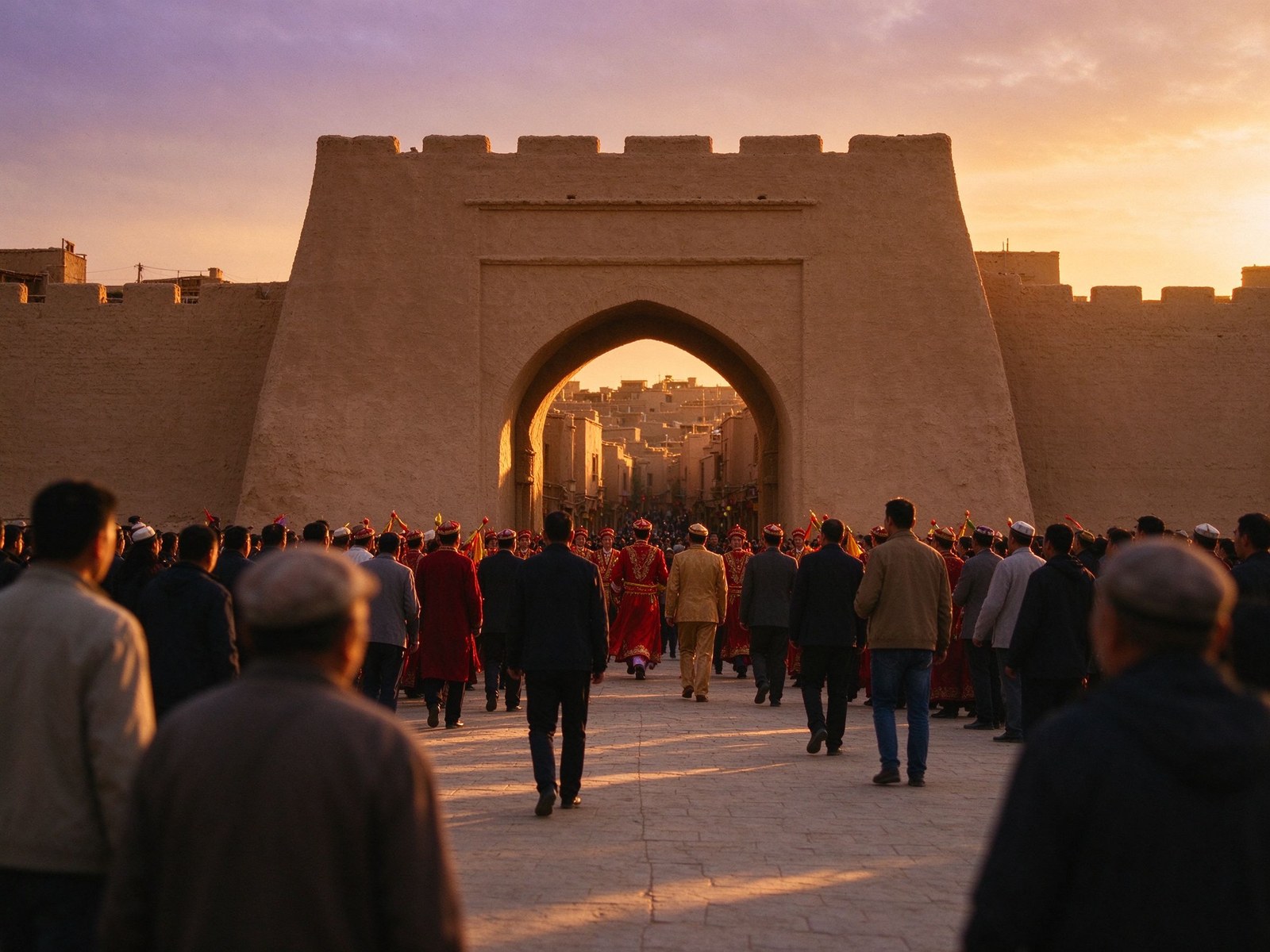
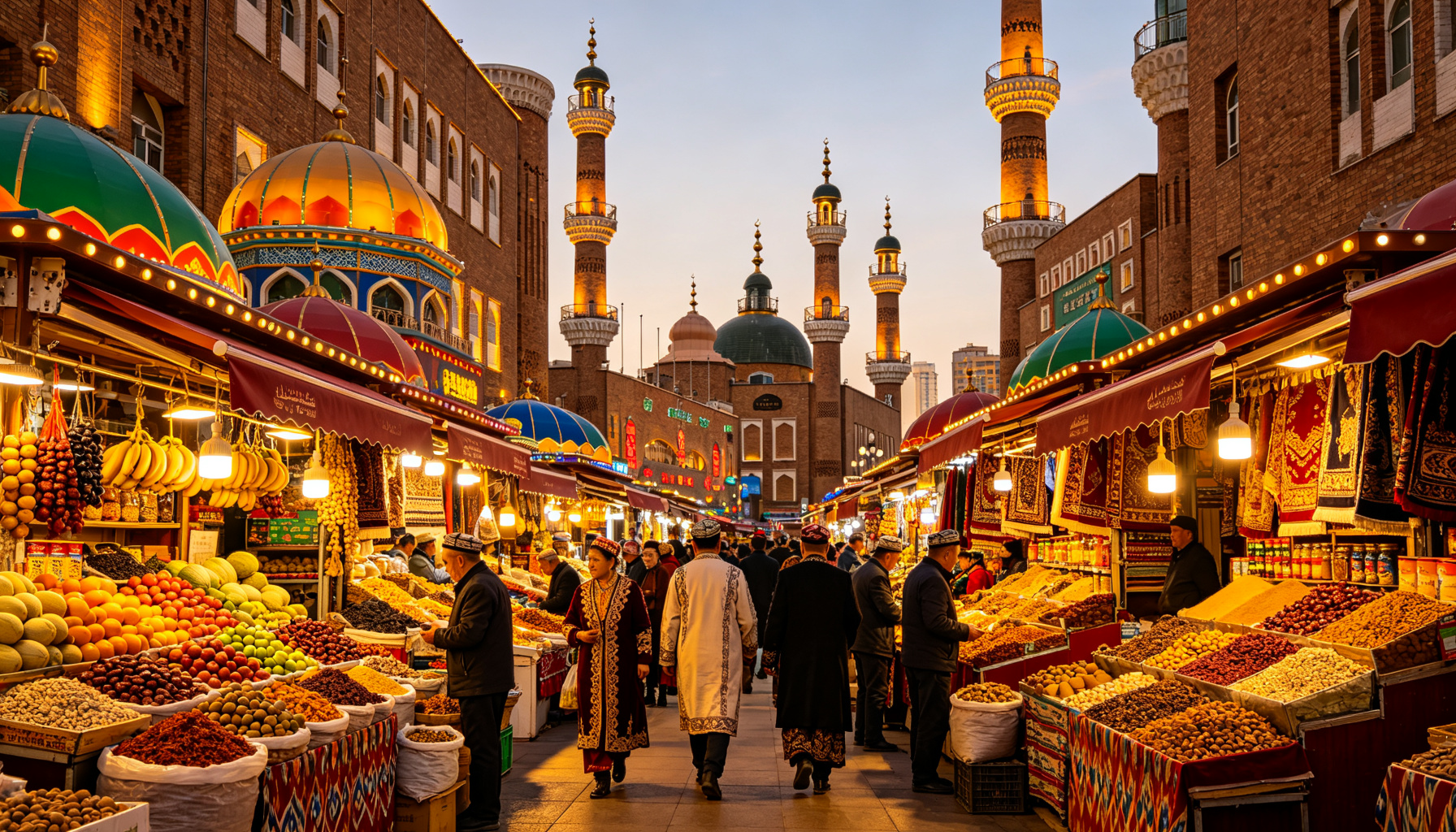
The Grand Bazaar is a living Central Asian market, not a themed street

Go at dusk when Uyghur stallholders sell fresh naan, spices and instruments. Use the visit to watch trade actually happen—comparing prices and buying by weight, not just photographing the minarets.

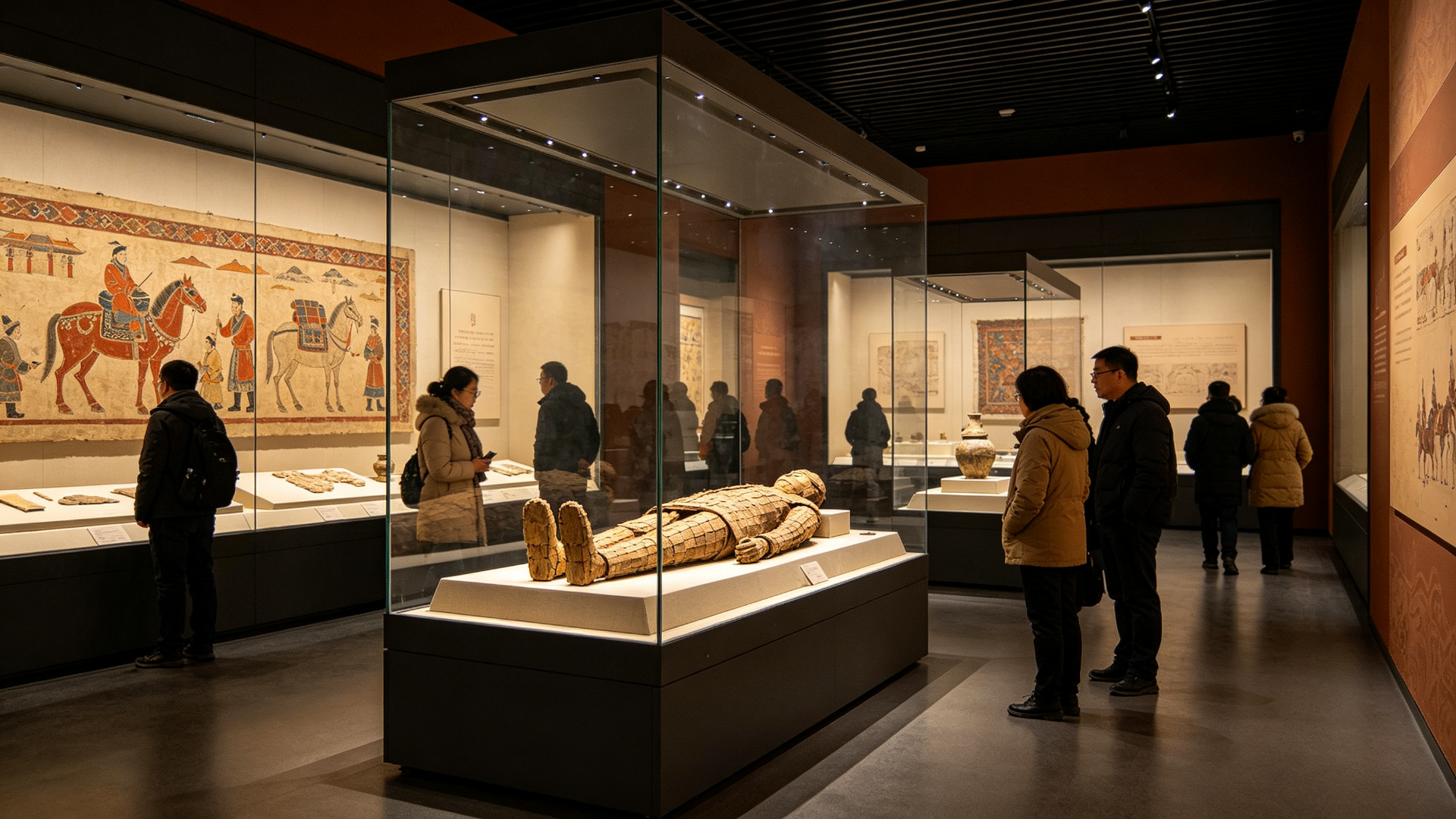
The provincial museum holds the frontier's 4,000 years in one building

Reserve a morning slot online first. Build context here before you see the bazaar or Tianchi—the Loulan and Xiaohe mummies and Silk Road grave goods explain why this city looks and tastes the way it does.

A glacial lake is a 1.5-hour drive from the city centre

Tianchi sits at roughly 1,900 m in the Tianshan. Take an early tour bus, carry a jacket, and treat the shuttle-ride up as part of the trip—the altitude and snow peaks change the air.

2

Museum morning, bazaar dusk, a Tianchi day out

The city’s signature line — depth entry, not a checklist.

The signature Urumqi sequence: a booked morning at the Xinjiang Museum to read Silk Road oasis history, a short climb to Hongshan Park for the pagoda view over the city and the Tianshan, then the Grand Bazaar at dusk for naan, lamb skewers and spices. Add Tianchi as the day that takes the city's 'mountain-and-market' identity out of the urban frame.

3

Experiences in this city

Add to trip to compare and prepare; check partner links for slots and price when shown.

4

Sights & culture

Beyond ticket notes — read the city’s character first.

The bazaar as Eurasian trading institution

Erdaoqiao's Grand Bazaar sits on a centuries-old oasis trade route where goods moved between China, Central Asia and Russia. Watch how vendors weigh spices and silk—the bargaining here is economic, not a performance for tourists.

The mummies that predate the Silk Road name

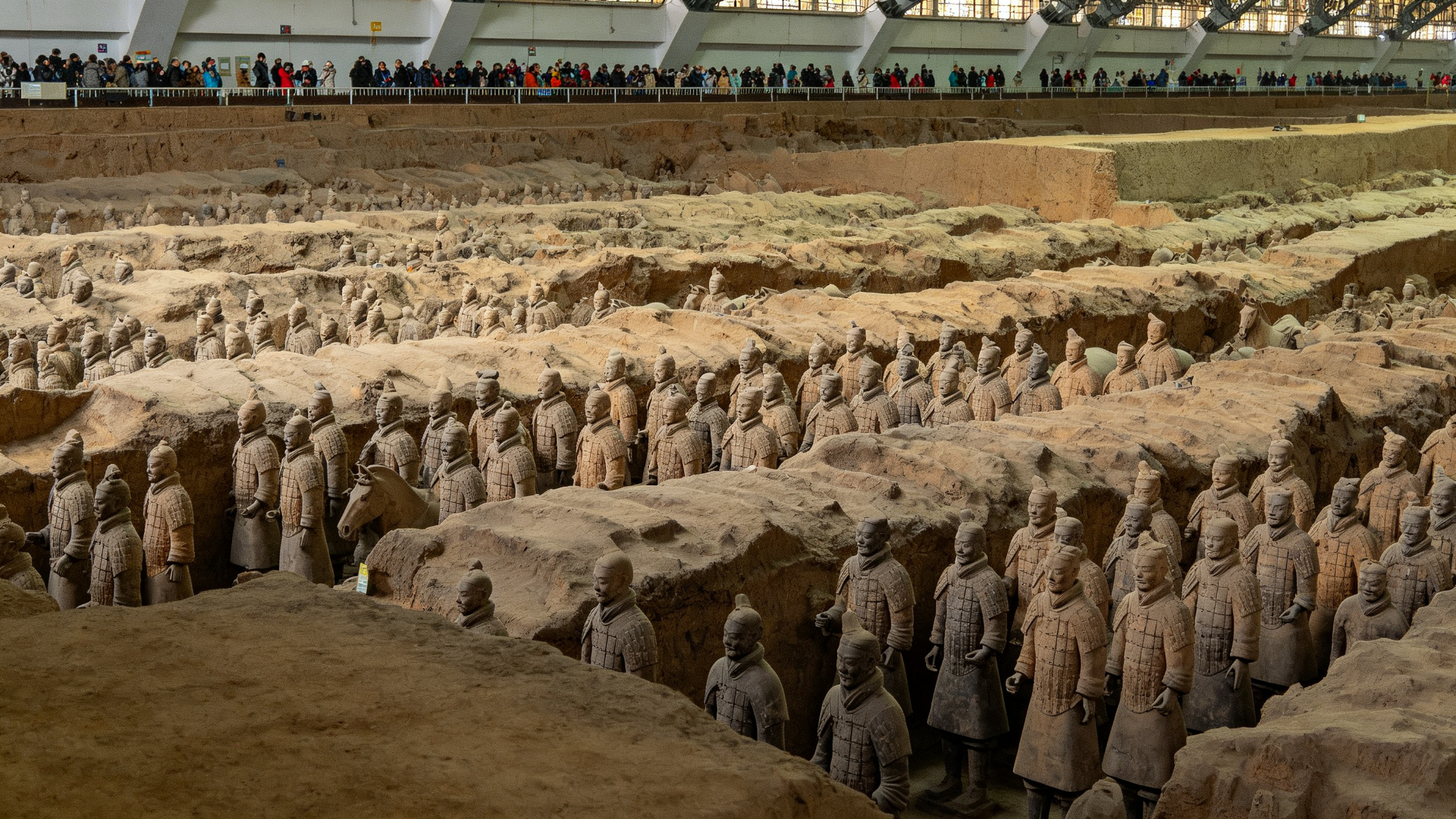
The museum's Loulan and Xiaohe mummies (roughly 3,800 years old) show a settled, mixed oasis population long before Han records. They reframe Xinjiang not as a border appendage but as an early meeting ground—read them before the Tang-dynasty silk-road galleries.

Tianchi and the Tianshan: nomadic memory and myth

The lake is tied to the Queen Mother of the West (Xi Wangmu) legend and to Kazakh and Kyrgyz summer-pasture (jailoo) herding traditions. The drive up is where you still see yurts and grazing herds—the mountain is working landscape, not just scenery.

Naan and pulled noodles as shared Silk Road technique

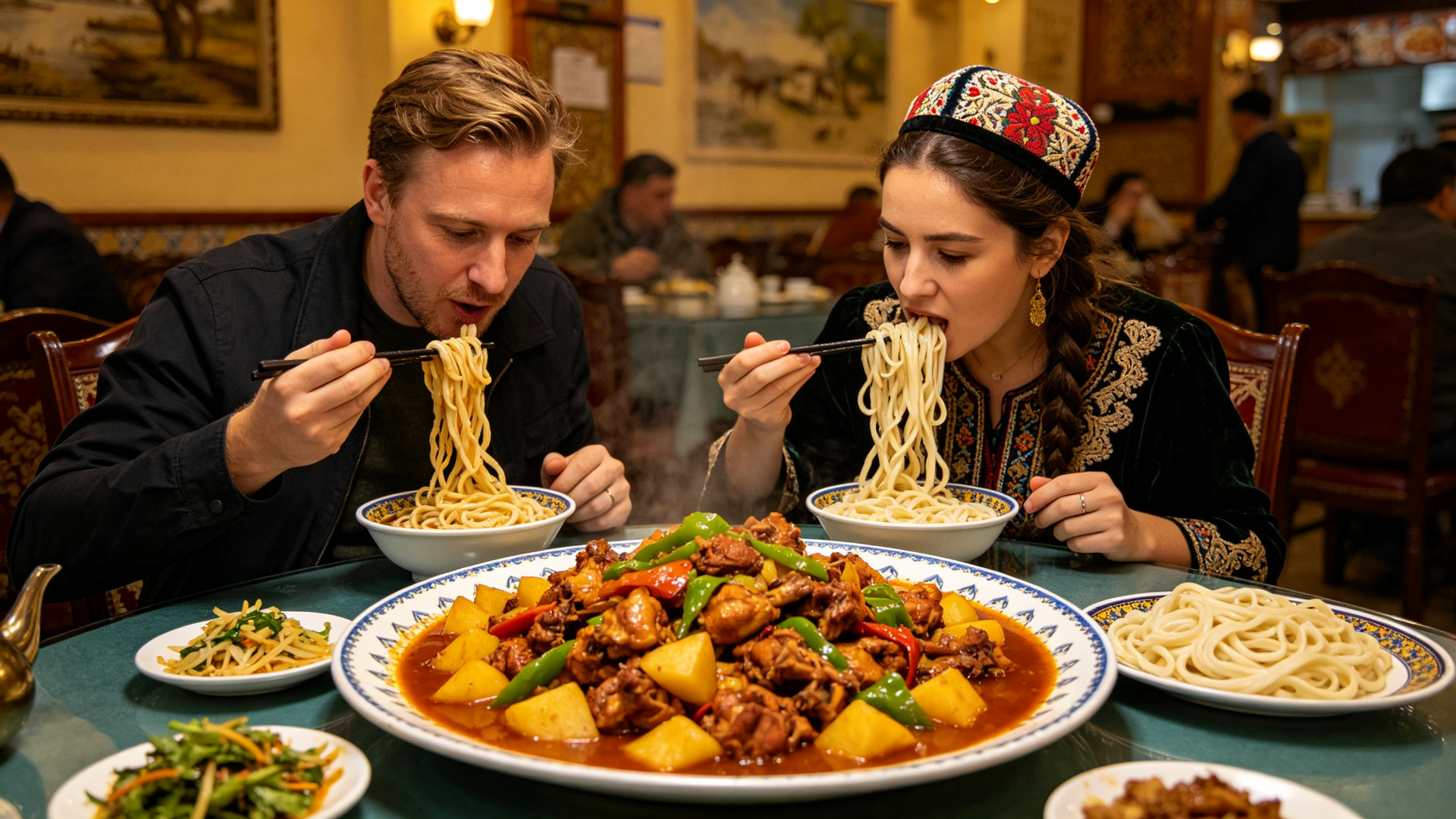
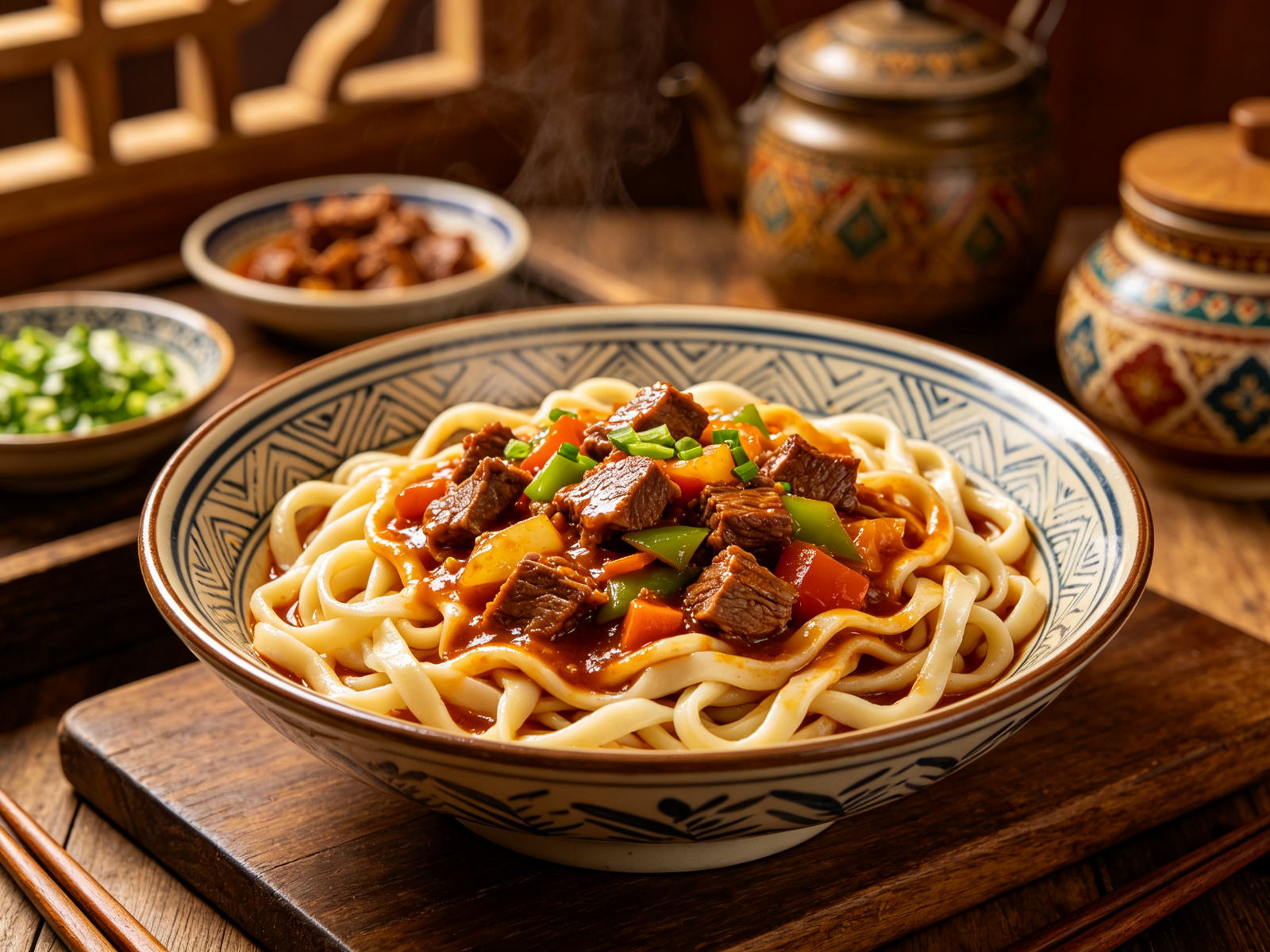
Tandoor-baked naan and hand-pulled laghman are part of a grain-and-noodle technique belt stretching across Central Asia. Watch the noodle pull in the window of an Uyghur restaurant—the repeated stretch is the craft, not the sauce.

Uyghur architecture translated into a modern landmark

The Grand Bazaar's tiled domes, minaret-like tower and iwan arches draw on Timurid and local Uyghur forms. Look at the tile patterns and brickwork up close rather than only the skyline—this is a deliberate modern revival, not an old neighborhood.

5

1–3 day routes

Executable skeletons: day-by-day anchors you can trim to fit.

1-day

1-day core: museum, pagoda, bazaar

  1. Morning: enter Xinjiang Museum by booked slot; start with the Silk Road and ancient-mummy halls (no photos there)
  2. Midday: hand-pulled laghman or samsa lunch near the museum / old town
  3. Afternoon: Hongshan Park, ~15-min climb to the 9-story pagoda for city-and-snow-peak views
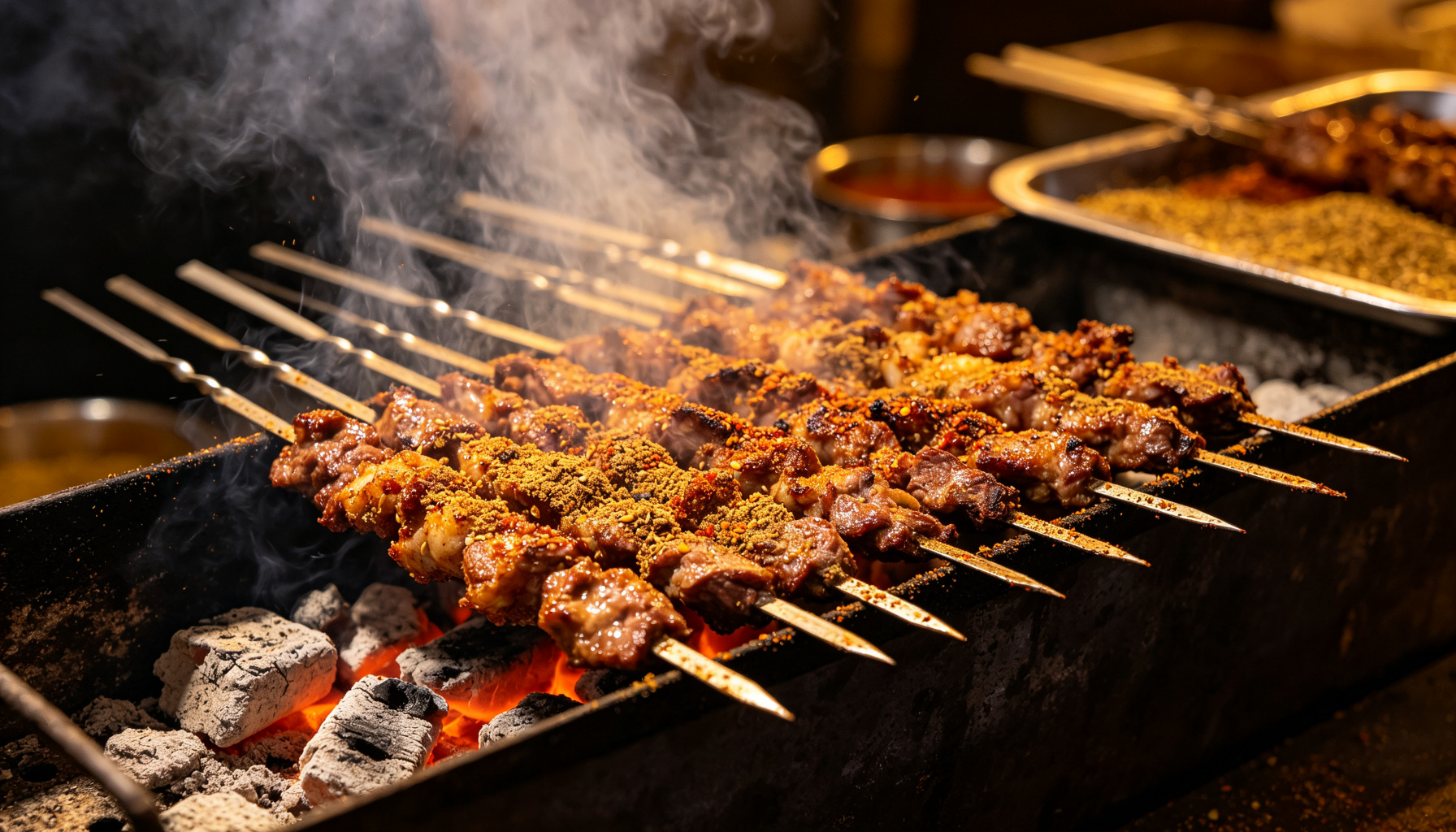
  4. Dusk: Grand Bazaar (Metro Line 1, Erdaoqiao) for fresh naan, lamb skewers, spice stalls; optional evening cultural show

For travelers with only a day between flights. Pace built around the museum's timed morning entry and the bazaar's evening glow.

6

Food & what to buy

Eat where Uyghur families queue: charcoal lamb skewers with cumin, tandoor-fresh naan, baked samsa buns, laghman and a big-plate chicken (dapanji) meant for sharing. For souvenirs, buy sealed dried fruit and nuts you will actually eat, and check handwoven Atlas silk against printed copies. Skip the prepackaged 'three Xinjiang specialties' gift boxes at the bazaar entrance—markup is highest where tour coaches stop.

  • Naan straight from the tandoor—hot and soft the same day; it turns hard by day two, so buy small and eat fresh.
  • Raisins and mixed dried fruit—buy sealed by weight at the stall; ask to weigh it yourself and check for added syrup.
  • Samsa (baked lamb buns) are for here, not home—greasy and best eaten hot; skip vacuum packs for travel.
  • Xinjiang walnuts, almonds and dates—sealed food-grade bags; compare price per jin (500 g), not per handful.
  • Atlas silk (atlas) textiles—turn the fabric over; handwoven has a denser, irregular pattern, printed copies look flat and uniform.
  • Small copper teapots / carved dutar-style instruments as décor—inspect solder and carving depth; shiny cheap plating fades fast.
7

Getting there & tips

Best time: June–September · Continental — very cold winters, warm summers

Metro (1 line) covers city center. Didi cheap. Heavenly Lake via tour bus (1.5h). Airport 20 min from center. High-speed rail to Turpan (1h), Kashgar (12h).

Urumqi visitor handbook

Payments

Chain stores and the metro accept Alipay/WeChat with bound foreign cards, but bazaar stalls, naan ovens and small noodle shops still prefer cash. Keep ¥300–500 small notes for weighing dried fruit and buying skewers; show Chinese addresses to Didi drivers.

Crowds & timing

The museum requires a timed free reservation (1–7 days ahead via its official WeChat) and is closed Mondays—weekend slots fill fast. The bazaar is busiest and brightest at dusk; Tianchi is crowded by mid-morning in summer, so take the earliest bus out. National holidays and Corban/Eid periods peak.

Etiquette at Uyghur venues

Most local restaurants are halal—do not bring pork or outside alcohol in, and use the right hand for passing food. Ask before photographing vendors or people; dress modestly near mosques. Do not touch or walk over laid-out bread or food displays.

ID & security checks

Security bag checks are more frequent than in eastern China—carry your passport at all times and keep it accessible. Ordinary tourists do not need a special permit for Urumqi itself, but border and sensitive counties need a border permit (边防证); confirm current rules before branching out.

Weather, altitude & UV

Dry continental climate: hot summers, very cold winters, big day-night swings. UV is strong and the air is dry—carry sunscreen, a hat and water. At Tianchi (~1,900 m) it is noticeably cooler than the city; bring a jacket even in summer.

Time zone & daylight

China uses a single Beijing clock, but Urumqi's social life runs roughly two hours later—sunsets near 22:00 in summer, shops open late morning. Meals are often served later than eastern China; adjust your schedule rather than expecting 18:00 dinners.

Getting around

Metro (1 line) covers city center.

Navigation

Didi cheap.

Pay

Metro, stalls, and rides mostly take Alipay or WeChat. Set up Alipay with a foreign card before you land.

Show this

Show the Chinese name “乌鲁木齐” to drivers and staff. It beats a long English explanation.

MetroMetro (1 line) covers city center. Didi cheap. Heavenly Lake via tour bus (1.5h). Airport 20 min from center. High-speed rail to Turpan (1h), Kashgar (12h).
BusMetro (1 line) covers city center. Didi cheap. Heavenly Lake via tour bus (1.5h). Airport 20 min from center. High-speed rail to Turpan (1h), Kashgar (12h).
Taxi / DidiDidi or a licensed taxi is the simplest door-to-door. Set destination to “乌鲁木齐” and pay in-app with Alipay/WeChat.

Urumqi hotels, transfers & popular bookings

Book tickets, transfers, and popular tours via partners first — then request deeper local experiences through ChinaPie.

Disclosure: Some links are affiliate links. ChinaPie may earn a commission on eligible bookings at no extra cost to you.

Prices shown are planning references only. Actual rates fluctuate with season, holidays, demand, and partner promotions — the price at checkout on the booking site is authoritative.

8

Urumqi FAQ & next step

Conversion stays soft — clear next steps: plan this city, or request planning help.

Is Urumqi safe for tourists?

Yes for typical tourist areas. Keep phones and bags secure on metro and in crowded night spots; use licensed taxis or Didi.

Do I need a visa to visit Urumqi?

Depends on your passport. Check ChinaPie Plan & Prep → Visa for 30-day visa-free and 240-hour transit options before booking.

Can I use Alipay in Urumqi?

Yes—foreigners can set up Alipay with passport + international card. See /prep/alipay-setup for the step-by-step guide.

Is it safe for foreigners to visit Xinjiang?

Yes, Urumqi and major tourist sites are safe for visitors. However, security checks are more frequent than in eastern China—carry your passport at all times. Some remote areas may require special permits. Stick to major tourist sites and registered guides. Check current travel advisories before going.

Which countries are visa-free for China in 2026?

China offers unilateral visa-free entry to 40+ countries including France, Germany, UK, Japan, South Korea, Singapore, Malaysia, Thailand, Italy, Spain, Netherlands, Switzerland, Sweden, Norway, Denmark, Finland, Belgium, Austria, Ireland, Portugal, Greece, and more. Stay: up to 30 days. IMPORTANT: US passport holders are NOT on the unilateral visa-free list and need a visa. Check latest list at China Immigration official site before travel.

Do US citizens need a visa for China?

Yes. US passport holders need a visa to enter mainland China. The 10-year multiple-entry tourist visa (L visa) is common: $185 fee, processing 3-5 business days. You can also use the 240-hour transit visa-free if transiting to a third country. Apply at Chinese embassy/consulate or via authorized visa agencies. Many travel blogs incorrectly say US is visa-free — this is false.

Can I use my foreign credit card in China?

Major hotels, international restaurants, and large malls accept Visa/Mastercard. But most small shops, street food, taxis, and local experiences only accept Alipay or WeChat Pay. Link your foreign card to Alipay (Tour Card) for daily use. Carry some cash (¥500-1000) as backup.

Is China safe for foreign tourists?

China is consistently ranked among the safest countries for tourists. Violent crime against foreigners is extremely rare. Common issues: pickpocketing in crowded areas (train stations, metro), taxi scams at airports, and fake goods at markets. Normal precautions apply: keep valuables secure, use licensed taxis/Didi, don't accept unsolicited tours. Women traveling solo generally feel very safe even at night.

How many days do I need in Urumqi?

Most first-timers do well with 1–3 days. Start with the 1-day core: museum, pagoda, bazaar, then expand to 2–3 days if you want slower food and culture. Use Plan this city to turn stops into a workable week.

Can I pay with a foreign card in Urumqi?

Foreign cards work more often via Alipay / WeChat Pay tourist modes and some metro apps, but coverage still varies by merchant. Keep a small cash float and set payment apps up before peak sightseeing. See the practical section on this hub for city-specific notes.

Plan this city
UrumqiCity hub
Plan